
The answer to concrete pool repair vs replacement is usually repair. Most problems in an older gunite pool are in the surface or the plumbing, not the shell. Replacement only makes sense when the shell itself is failing or the pool no longer suits how you use it. An inspection should make that call, not a guess. If your pool is showing its age, our gunite and shotcrete pool repair page explains what can be fixed without rebuilding.
Owners of older pools often end up asking whether to repair or replace a gunite pool, usually right after a worrying estimate. This guide helps Northwest Arkansas owners sort the problems that are usually repairable from the few that point toward a rebuild. It also explains what changes the answer in our part of the country.
Most Concrete Pools Can Be Repaired
A gunite pool is sprayed concrete over a steel frame, and it’s built to outlast its finish many times over. Our guide on the average life of a gunite pool puts the structural shell at 50 years or more with proper care. The plaster surface is typically renewed every 10 to 15 years. Those are two separate clocks, and mixing them up is a common reason owners think a pool is finished.
A rough or faded pool looks like a pool at the end of its life. In most cases it’s only the surface that’s worn out, and the shell underneath is still doing its job. A tired surface is not a tired shell, and the two are repaired in very different ways.
That’s why the honest starting point is repair. Replace a pool when the structure can’t be made sound, or when it’s the wrong pool for your family, not just because it’s old.
Problems That Are Usually Repairable
Most problems in an older concrete pool fall into a handful of categories, and each has a standard fix. The table below shows what each problem usually means, how it’s fixed and how long the repair typically takes, using the timelines on our repair page.
| Problem | What it usually means | Usual fix | Typical repair time |
|---|---|---|---|
| Rough texture and stains | The surface is worn | Resurfacing | 1 to 2 weeks with curing |
| Hairline or spiderweb cracks | Shallow cracks in the plaster only | Patch or monitor | 1 to 3 days |
| Loose tile or cracked coping | Wear at the edge and waterline | Tile and coping repair | Depends on the inspection |
| Water loss with no clear cause | A plumbing or shell leak | Pressure testing and leak repair | 2 to 4 days |
| Equipment running longer than before | Aging pump or a leak | Equipment service or a leak check | Depends on the inspection |
Surface wear is the biggest category. If the plaster is rough or flaking, pool resurfacing and replastering restores the finish without touching the structure. National cost guides such as HomeGuide and Angi put resurfacing at about $6,000 to $15,000. Our resurfacing page says the pool is usually ready to swim in one to two weeks.
Cracks are the category people fear most, and most of them aren’t the dangerous kind. Our post on common gunite pool cracks explains that hairline and spiderweb cracks usually stay in the plaster and rarely mean structural failure. The cost shows the difference. HomeGuide’s repair guide lists small crack repairs at about $100 to $200 and larger cracks at about $700 to $1,000. A crack along the bond beam runs about $4,000 to $6,000. A longer crack with a ridge or offset is a different matter, which we cover next.
Leaks are usually fixable too. Our repair page notes that most leaks can be handled with pressure testing followed by sealing or patching, without a full rebuild. HomeGuide puts a typical leak repair at about $500 to $1,500. The key is finding the actual source before anyone cuts into the pool.
Signs Replacement May Make More Sense
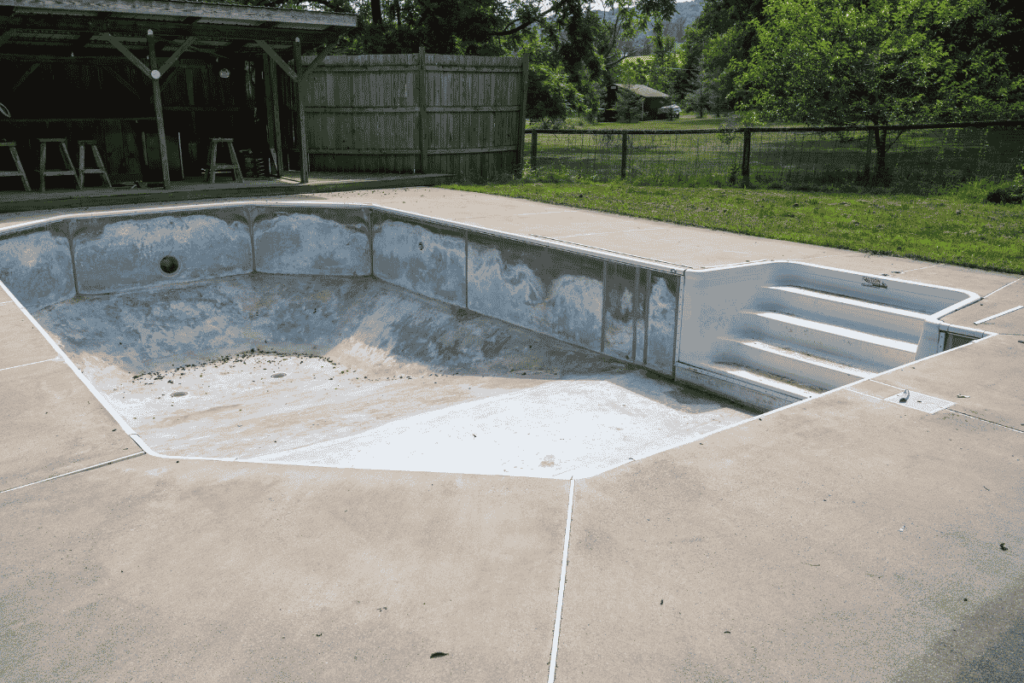
To know when to replace a concrete pool, start with two questions: is the problem in the shell, and are the repairs holding? No single sign decides it, but a few together should make you pause before paying for another patch.
The first sign is a crack that comes back. If a structural crack reappears or keeps widening after a proper repair, the cause is probably still active, and sealing the crack doesn’t remove the cause. The second is movement. A crack with a ridge or offset between its two sides can mean the shell is shifting, especially near the bond beam or the steps.
The third sign is a leak that returns after you’ve paid to fix it. One leak is a repair. Leaks that keep appearing in different places can mean the shell or the plumbing is failing as a whole. The fourth is water loss that testing can’t explain, because you can’t repair what no one can find.
The last reason isn’t damage at all. Some owners have a sound pool in a shape or depth that no longer fits how they swim, and a rebuild may suit them better than keeping it. Before you assume that, look at our pool renovation and remodeling page. Shape changes and added features such as steps or benches can often be done on the existing shell without starting over. A pool that’s only outdated usually needs a renovation, not a replacement.
How Northwest Arkansas Conditions Play a Part
Local ground and weather put more stress on concrete pools than most owners realize. The Arkansas Geological Survey explains that clay-rich soils in Arkansas shrink and swell as their moisture changes. Over many cycles, that can move the ground enough to crack concrete. The clay-heavy Ozark soil in our area behaves this way, which is one reason older pools here crack so often.
Freezing winters add stress to the shell a little at a time, year after year. Water adds more. Groundwater can press on the shell when a pool is drained or when the water table rises, so don’t drain your pool yourself to look for damage. Ask a pool professional before you empty it.
Here’s how that changes the repair-or-replace question. A single crack in a pool on steady ground is a repair. The same crack where the soil keeps moving may keep coming back, so the cause matters as much as the crack. If water collects near the deck or the shell, point it out at the inspection. Clay doesn’t tolerate ground that stays wet and then dries out.
Repair, Renovation or Rebuild: A Rough Cost Comparison
Comparing gunite pool repair cost vs new pool cost only helps when the numbers cover the same scope. The table below shows each option and what it typically costs, using national ranges from Angi and HomeGuide. Everything else depends on the inspection.
| Option | What it addresses | Typical cost range | Typical time |
|---|---|---|---|
| Minor repair | Small cracks and leaks | About $100 to $200 for small cracks and $500 to $1,500 for a leak | 1 to 4 days |
| Larger repair | Bond beam cracks and retiling | About $2,500 to $6,000 | 3 to 5 days |
| Resurfacing | Worn or damaged surface | About $6,000 to $15,000 | 5 to 10 days on site |
| Renovation | Several repairs or upgrades together | Usually more than resurfacing, depending on scope | A few weeks |
| Rebuild | A failing shell or a pool that can’t be made right | About $65,000 to $120,000 for a new gunite pool, plus $2,500 to $16,000 to remove the old one | A full construction schedule |
Two rows need a note. Reshaping is the expensive end of a renovation: Angi lists it at $20,000 to $100,000, and adding depth runs about $10,000 to $50,000. That’s why an outdated shape or depth is a real cost question and not just a style one. Small, stable cracks cost the least to fix. Structural repairs cost considerably more because they usually require draining the pool and reinforcing the shell.
These are national ranges, not a quote for your pool. Northwest Arkansas pricing, the size of your pool and its condition can all change them, and the inspection sets the real number.
Don’t let cost alone make the call. A repair that costs a fraction of a new pool isn’t a bargain if the same area fails again in two years. A rebuild isn’t a bargain either if a repair would have solved the problem for years. Ask for both prices in writing on the same scope, and compare what each one will fix and what it won’t.
How We Assess a Pool Before Recommending Either
A fair recommendation starts with a hands-on look, and the order matters. Our repair process begins with a detailed structural and visual inspection. Then you get a written repair plan and quote before any work begins. For a crack, the first questions are whether it’s in the plaster or runs through the shell, and how close it is to the bond beam and other high-stress points. We also check whether the pool loses more water than evaporation explains.
What we recommend follows from what we find:
- A small, stable crack gets a patch or monitoring.
- A structural crack gets a shell repair.
- Cracking that comes with widespread surface wear may call for resurfacing instead.
- A leak gets pressure tested, so the source is found before anything is opened up.
If the answer is a rebuild, choose a pool builder in Northwest Arkansas who will show you the repair and rebuild prices side by side. They should be able to explain in plain terms why a repair won’t hold.
Frequently Asked Questions
Can a cracked gunite pool be repaired?
Usually, yes. Hairline cracks in the plaster are often patched or monitored, and structural cracks can be repaired by reinforcing the shell. The cause matters, so a crack that keeps coming back after a repair needs a closer look at the soil and the shell.
How do I know if my concrete pool needs to be replaced?
The main signs are structural cracks that come back after repair and a shell with a ridge or offset. Repeated leaks and unexplained water loss count too. One sign alone rarely decides it, so get an inspection before you choose.
How long does a gunite pool last before it needs to be replaced?
The structural shell can last 50 years or more with proper care, while the plaster surface is typically renewed every 10 to 15 years. A worn surface is usually a resurfacing job, not a reason to rebuild.
Is it cheaper to repair or replace a gunite pool?
Repair or resurfacing usually costs far less than a new pool. National guides put repairs at about $100 to $6,000 and resurfacing at about $6,000 to $15,000, while a new gunite pool runs about $65,000 to $120,000. The exact figure depends on the inspection, and repeated failures can change the math.
Can I change the shape or features of my pool without rebuilding it?
Often, yes. Shape changes and added features such as steps or benches can be done as part of a renovation on the existing shell. Reshaping can run about $20,000 to $100,000, and adding depth about $10,000 to $50,000. How much change your pool can take depends on its condition, so ask during the inspection.
Should I drain my pool to look for damage?
Not without advice. Structural repairs usually require draining, but groundwater can press on the shell when the pool is empty. Ask a pool professional how and when to drain it.
Concrete Pool Repair vs Replacement in Northwest Arkansas Starts With an Inspection
Concrete pool repair vs replacement comes down to whether the shell is sound and whether the repairs hold. Most older pools need surface or leak work, not a rebuild. Rebuilding is the right call when the structure keeps failing or the pool no longer fits your life. An inspection is how you find out which one you have.
If you have an older gunite or concrete pool and want an honest read on whether it can be saved, contact BC Pools and we’ll talk through what your pool needs.