
A fiberglass pool is a single, pre-manufactured shell made of layered fiberglass and resin, built off-site in a factory mold and delivered whole to your property for installation. Unlike gunite, which is built in place over weeks, a fiberglass pool arrives already formed, which changes almost everything about how the project comes together and how the pool holds up over time.
We get asked about fiberglass constantly by clients comparing it against gunite, and the honest starting point is understanding that it’s a genuinely different manufacturing philosophy, not just a cheaper or faster version of the same idea. Knowing how the shell is actually made explains most of the pros and cons people ask about.
How a Fiberglass Pool Shell Is Actually Built
Here’s the part that surprises people who assume all pools are built the same way on-site. A fiberglass pool starts as a large, precision mold shaped like the finished pool, and the shell is built inside that mold in layers, from the inside out.
The very first layer sprayed onto the mold is the gel coat, a colored resin coating that becomes the smooth, visible surface you actually touch when you’re in the pool. According to the American Composites Manufacturers Association, gel coat functions as a protective resin layer applied over fiberglass reinforcement, and getting its thickness and cure right is what determines how well that surface holds up over time. Once the gel coat sets, layers of fiberglass reinforcement and resin are built up behind it, giving the shell its structural strength. After the shell fully cures, it’s lifted off the mold as one complete piece and inspected before it ever leaves the factory.
From Factory to Backyard: The Installation Process
Because the shell arrives already built, installation looks completely different from a gunite pool build. A hole matching the shell’s shape is excavated, a stone or sand base is prepared, and the pool is lowered into place, typically by crane, as one single unit. From there, plumbing gets connected and the shell is backfilled and leveled. Decking installation follows once the shell is properly set.
This is exactly why fiberglass installations move faster than gunite installations. Most of the labor-intensive work already happened at the factory, weeks or months before your excavation ever begins, so what’s left on-site is largely site prep and finishing work rather than building the pool structure itself. That’s the real advantage of choosing fiberglass pool installation, the shell’s already done before your project even starts.
The Real Advantages of a Fiberglass Pool
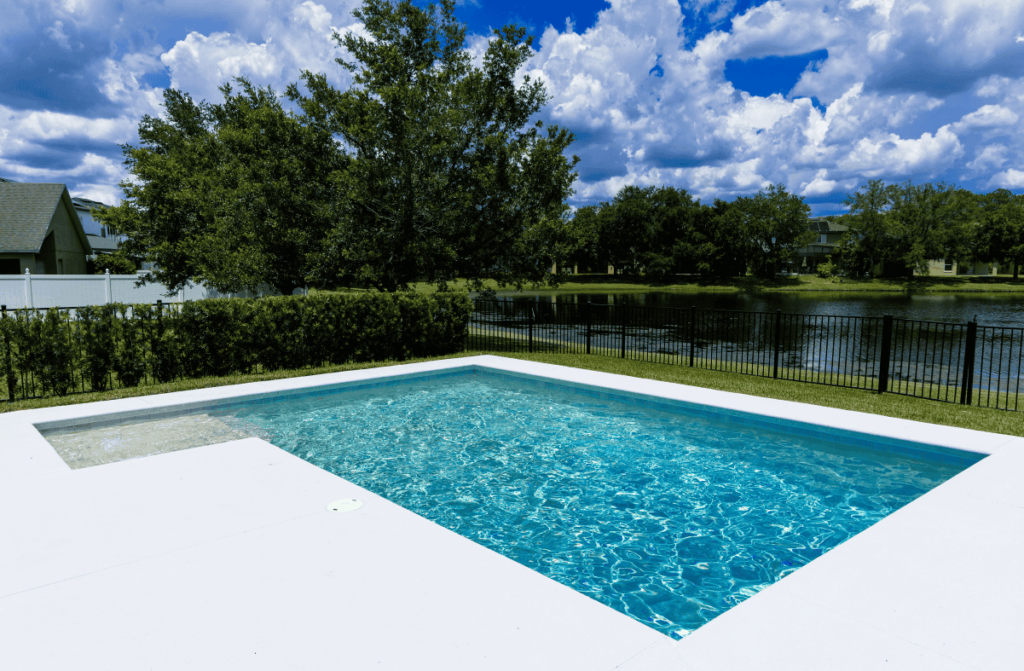
Low maintenance is the advantage people hear about most, and it’s genuinely earned. Because the gel coat surface is relatively nonporous, it resists algae growth far better than a porous surface like plaster, which means less brushing and less aggressive chemical treatment to keep the water clear.
Installation speed is the other major advantage. Since the shell arrives pre-built, a fiberglass pool typically goes from excavation to water in a matter of weeks rather than the months a gunite build can take, weather and permitting timelines permitting.
The smooth gel coat surface itself is also a genuine comfort advantage, no rough plaster or aggregate texture to contend with, which matters for families with young children or anyone sensitive to abrasive pool surfaces.
The Real Tradeoffs of a Fiberglass Pool
Size and shape are the biggest constraint, and it’s a structural one, not a design limitation someone chose. Because the shell has to be transported whole from the factory to your property, its dimensions are limited by what can physically travel on a truck and maneuver into your backyard. Custom, one-of-a-kind shapes simply aren’t possible the way they are with gunite, which is poured and formed on-site.
Upfront shell cost is another consideration, since you’re paying for a manufactured, engineered product rather than labor and materials assembled on-site. Depending on the size and features chosen, that can shift the overall cost comparison against gunite in either direction.
The gel coat surface, while a real advantage for maintenance, also ages in its own specific way over time. We covered exactly what that aging looks like and when it needs attention in signs your fiberglass pool needs repair, since understanding how the surface changes over the years is part of understanding what you’re actually buying.
Fiberglass Pool Cost and Lifespan at a Glance
| Fiberglass | |
|---|---|
| Installation timeline | Typically weeks, once site work begins |
| Surface maintenance | Lower than gunite, nonporous gel coat resists algae |
| Shape flexibility | Limited to manufacturer’s pre-designed molds |
| Expected lifespan | Often 25 to 30+ years for the shell itself |
| Biggest long-term concern | Gel coat aging over time |
Actual lifespan and performance depend heavily on installation quality, water chemistry, and the specific manufacturer’s construction standards.
Is a Fiberglass Pool Right for Your Backyard?
More often than not, this decision comes down to how much you value speed and low maintenance versus how much creative control you want over the pool’s exact shape and size. If a manufacturer’s standard shape fits your space and aesthetic goals, fiberglass offers a genuinely fast, low-upkeep path to a finished pool.
If you’re envisioning a fully custom shape, unusual dimensions, or specific features that don’t exist in a standard mold, gunite remains the more flexible option, just with a longer build timeline and different maintenance demands. Neither answer is universally correct. It depends on your property, your priorities, and how much you value speed against customization.
Frequently Asked Questions
How long does a fiberglass pool shell typically last?
The shell itself is often rated for 25 to 30 years or more, though the gel coat surface can show cosmetic aging well before the structural shell reaches the end of its life.
Why is fiberglass considered lower maintenance than other pool types?
The gel coat surface is relatively nonporous, which resists algae growth and reduces how often the pool needs aggressive brushing or chemical treatment compared to a more porous surface.
Can a fiberglass pool be any size or shape?
No. Shell size and shape are limited to what a manufacturer has designed and what can be transported to your property, unlike gunite, which is formed on-site.
How long does fiberglass pool installation take?
Once site work begins, installation is typically measured in weeks rather than the months a gunite build can take, since the shell itself arrives already complete.
Does a fiberglass pool need to be resurfaced like a gunite pool?
Not in the same way. The gel coat can be refinished if it ages significantly, but it doesn’t require the same periodic resurfacing cycle that plaster does.
Is fiberglass more or less expensive than gunite?
It depends on size, features, and site conditions. Fiberglass shell costs and gunite construction costs are calculated very differently, so a direct comparison depends on your specific project.
Can a fiberglass pool be installed on any type of property?
Access matters more here than with gunite, since the shell has to be delivered and maneuvered into place as one piece, which can be a constraint on properties with limited access.
What causes fiberglass pool surfaces to fade over time?
UV exposure gradually breaks down the gel coat’s pigment and gloss over years, which is a normal aging process rather than a defect.
Is a fiberglass pool a good option for a first-time pool owner?
Often, yes, particularly for owners who want a lower-maintenance option and don’t need a highly custom shape.
How do I know if fiberglass is the right choice compared to gunite or vinyl?
It comes down to your priorities around upkeep, timeline, and how much shape flexibility you actually need for your space.
Understanding What a Fiberglass Pool Actually Is Before You Build
A fiberglass pool is a manufactured shell, built in layers starting with the gel coat surface, cured as one complete unit, and installed as a finished structure rather than built in place. That manufacturing approach is exactly what drives its biggest advantages, speed and low maintenance, and its biggest tradeoff, limited shape flexibility.
If you’re considering a fiberglass pool for your Northwest Arkansas backyard, contact BC Pools and we’ll walk you through whether it’s the right fit for your property and what you’re hoping to build.