
The clearest signs your vinyl liner needs replacing are widespread fading and brittleness, along with leaks in more than one place. A single puncture in an otherwise supple liner is usually a repair, not a replacement.
Owners usually call after noticing something off, such as a wrinkle that won’t smooth out or a water level that keeps dropping. What they want to know is whether it’s a quick fix or the end of the liner. The honest answer depends on the whole liner, not the one spot you noticed. It also depends on whether the liner is the source of the problem at all.
First, Rule Out the Equipment
Before you decide the liner is the problem, make sure it is. The City of Scottsdale’s water department notes that most pool leaks are found in the pool equipment, so a dropping water level doesn’t automatically point to the liner.
The simple way to sort it out is a bucket test. Place a bucket on a pool step and fill it to the same level as the pool water, then mark both levels. Stop adding water and avoid backwashing while the test runs. If the pool drops more than the bucket, you have a leak, since both lose water to evaporation and only the pool can lose it to a leak. Scottsdale recommends waiting two to three days and redoing the test if it rains or turns windy.
Then repeat the test with the pool equipment running and again with it off. If more water is lost with the pump running, the plumbing is probably the cause. If the loss is about the same either way, the liner or the pool structure becomes the likelier suspect. A level that drops and then stops at a certain height can also point to a leak near that height, such as a fitting or a tear on the wall.
Fading, a Rough Feel, and Brittle Vinyl
Fading is usually the first visible sign. Years of sun and pool chemistry pull the color out of a liner’s pattern, and fading alone isn’t an emergency. A faded liner that still feels smooth and flexible can keep doing its job for a while.
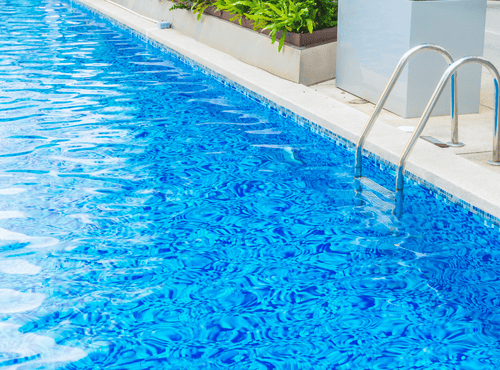
The more telling test is touch. Run your hand along the wall and the floor. Healthy vinyl feels smooth and slightly flexible. A liner that feels rough or chalky has lost the qualities that keep it supple, and one that has gone brittle will show cracks near the waterline and around the steps.
Brittleness changes the repair question. A patch needs flexible vinyl around it to hold, and brittle vinyl tends to crack again beside the patch. That’s why a liner that’s both faded and brittle is usually a replacement conversation, even when the original problem looks small.
In short, fading alone is a watch item. A rough or brittle feel is the point where replacement moves from possible to likely.
Wrinkles, Stretching, and a Liner That Pulls Away
Some wrinkles settle in the first weeks after installation, and they don’t mean much. Wrinkles that keep returning or grow each season are different. They usually mean the liner has stretched or shifted out of its track.
Wrinkles don’t always point to a worn-out liner, though. Low water levels or ground movement can cause them, and so can water trapped behind the liner. A corner that pulls loose is a stronger signal, since a liner that stops holding its fit tends to keep stretching.
Wrinkles also collect debris and make cleaning harder, and a loose or slick liner on the steps is a safety concern. If the liner feels uneven underfoot or the steps have turned slippery, have it looked at before the next swim season.
One simple habit helps here. Photograph the wrinkle from the same spot every week or two. A wrinkle that holds its size is a nuisance, while one that grows is telling you the liner is still moving.
Vinyl Liner Warning Signs at a Glance
| Sign | What it usually points to | Typical next step |
|---|---|---|
| One small puncture in a supple liner | Isolated damage | Repair |
| Fading with a smooth, flexible feel | Sun and chemical wear | Keep chemistry balanced and monitor |
| Fading with a rough or chalky feel | Vinyl breaking down | Plan for replacement |
| Cracks near the waterline or steps | Brittle vinyl | Replacement is likely |
| Leaks in more than one place | Widespread wear | Replacement |
| Wrinkles that keep returning | A stretched or shifted liner | Inspection, often replacement |
| Same water loss with the pump on or off | A possible liner or structure leak | Professional inspection |
Repair or Replace: How to Decide
A repair makes sense when the damage is isolated and the rest of the liner is in good shape. That means the vinyl is still supple and the color is holding. It also means there are no other leaks. A professional patch on a healthy liner can last for years.
Replacement makes sense when the vinyl has gone brittle or leaks in several places. It also makes sense when you’ve already patched the liner more than once and new problems keep appearing, because at that point you’re paying for repairs that only delay the inevitable.
Age is a rough guide, not a rule. A well-cared-for liner can outlast a neglected younger one, so condition matters more than the calendar. If you’d rather have someone assess the whole liner before you spend money, a vinyl liner pool repair and replacement inspection can tell you which side of the line you’re on.
What Happens If You Keep Putting It Off
Waiting rarely makes a failing liner cheaper to deal with. A liner that leaks keeps sending water into the ground behind the wall, and that can soften the soil and the base the pool depends on. The pool also needs constant top-offs, which means paying again for water and rebalancing the chemistry each time.
There is a quieter risk too. A brittle liner can split without warning, and a sudden drop in water level can leave the walls and floor under stress they weren’t built for. Replacing a liner on your own schedule is almost always easier than replacing one after it has failed.
A leaking or brittle liner tends to cause more damage the longer it stays in service. Acting early usually keeps the problem limited to the liner.
Why Liners Wear Out Faster Than Owners Expect
Sun and winter take a toll on every liner, but the factor owners control most is water chemistry. Water that runs out of balance, whether too acidic or over-sanitized, is hard on vinyl in any season. Testing often and keeping the water balanced is the cheapest way to add years to a liner.
Northwest Arkansas adds long, intense summers and winters that drop below freezing. Closing the pool properly each fall matters more here than it does in milder climates, since a poorly winterized liner can crack or wrinkle along the waterline by spring.
What Liner Replacement Involves
Replacement starts with an inspection and exact measurements, because the new liner is fabricated to fit your pool’s shape and dimensions. Fabrication and shipping take time, and that lead time is the part that surprises most owners.
Once the new liner arrives, the work itself usually takes only a few days. The pool is drained and the old liner comes out. The walls and floor are inspected and cleaned, and the new liner is fitted into the track and pulled tight with a vacuum so it lies flat. The pool is then refilled while the crew watches for wrinkles.
Draining deserves care. Groundwater pushes against the outside of the pool, and an empty vinyl pool has less water weight holding things in place. A careful crew checks ground conditions before lowering the water and doesn’t leave the pool empty longer than it needs to.
What Gets Checked Under the Old Liner
The liner hides whatever is underneath, so removing it is the first honest look at the pool’s structure. Steel wall panels are checked for rust, and polymer panels for movement. The floor, whether sand or concrete, is checked for soft spots that would show through a new liner. The track that holds the liner and the coping above it get a look too.
Problems found now are cheaper to fix than problems found after the new liner is in. It’s also why a replacement estimate can shift once the old liner is out.
Choosing the Next Liner
Thicker vinyl generally resists punctures and fading better, so ask what thickness is being quoted and how the seams are made. The pattern matters too. Ask which prints the installer has seen hold their color in local pools, since a showroom sample can’t show you how a pattern ages in the sun.
Textured liners add grip on the steps and shallow areas, which matters if you have kids or an older swimmer. Ask exactly what the liner warranty covers. Then ask how coverage changes as the liner ages and what could void it. Our warranty information and claims page explains how to file a claim.
It also helps to ask whether the quote lists wall or floor repairs separately, because repairs found under the old liner are the usual source of surprises.
Timing a Replacement in Northwest Arkansas
Because the liner is custom-made, lead time often decides the schedule. If you want to swim by late spring, start the conversation over the winter instead of waiting for the first warm weekend. Installers also generally prefer mild weather, since vinyl is easier to fit when it isn’t cold.
When the Problem Isn’t Just the Liner
If the walls are failing or the ground around the pool is moving, a new liner treats the symptom and not the cause. At that point it can be worth stepping back to compare your options. Our gunite vs. fiberglass vs. vinyl liner comparison lays out how each pool type handles Northwest Arkansas soil and what each costs to own over time.
Frequently Asked Questions
How do I know if my vinyl pool liner needs to be replaced?
Look for brittleness or cracking, along with fading paired with a rough feel. Leaks in more than one place or wrinkles that keep coming back count too. Any one of these can be manageable, but several together usually mean replacement.
Can I patch a vinyl liner instead of replacing it?
Yes, if the damage is isolated and the rest of the liner is supple. Patches don’t hold well on brittle vinyl, so an older liner with several problems is usually better replaced.
How can I tell if water loss is from the liner or the equipment?
Run a bucket test, then repeat it with the pump on and off. If more water is lost with the pump running, the plumbing is the likelier cause. If the loss is about the same either way, the liner or structure becomes the likelier suspect.
Why is my vinyl liner wrinkling?
It can be age and stretching. Low water or ground movement can cause it too, and so can water trapped behind the liner. Wrinkles that keep returning are worth having inspected.
How long does vinyl liner replacement take?
The on-site work usually takes only a few days once the new liner arrives. The custom liner itself takes time to fabricate and ship, so plan the lead time into your schedule.
Do I have to drain the pool to replace the liner?
Yes, the old liner has to come out. Draining needs care because groundwater pressure can affect an empty pool, so the timing and how long the pool stays empty matter.
Knowing When Your Vinyl Liner Needs Replacing
A vinyl liner needs replacing when the vinyl itself is failing, not just when one spot has a problem. Rule out the equipment first, then look at the whole liner. Repair isolated damage on a healthy liner, and plan for replacement when it’s brittle or leaking in several places. Allow for the custom lead time, and have the structure checked while the old liner is out.
If you’re seeing any of these signs and want a straight answer on whether you’re looking at a repair or a replacement, contact BC Pools and we’ll take a look.