Plaster, pebble, and quartz are the three main finish options for a gunite pool, and they differ mainly in lifespan, texture, and upfront cost. Plaster is the most affordable option but has the shortest lifespan. Pebble sits at the opposite end, the most durable and most expensive of the three. Quartz lands in the middle on nearly every measure. Which one makes sense for you comes down to how long you plan to own the pool and how much you value a smooth surface versus a longer resurfacing cycle.
We get this question constantly from clients who are resurfacing an older pool or finishing a new build, and it usually comes after they’ve already absorbed the bigger decisions- gunite versus fiberglass, budget, size- and finish feels like an afterthought by comparison. It shouldn’t be. The finish is what you actually touch every time you’re in the water, and it’s one of the few decisions in a pool build that gets revisited every decade or so for the life of the pool.
If you’re still weighing pool types for a new build, our gunite and shotcrete pool builder guide breaks down why concrete pools hold up so well in NWA’s soil before you even get to the finish decision.
Why Finish Choice Matters More Than It Seems
Here’s the thing people don’t think about until they’re standing in a pool store looking at sample chips. The finish isn’t just a color choice. It’s the layer that determines how the surface feels underfoot, how well it resists staining and algae, and how often you’ll be paying to resurface.
Plastering work in the pool industry is governed by an actual national standard, the ANSI/PHTA/ICC/NPC-12 standard for the plastering of swimming pools and spas, maintained by the Pool & Hot Tub Alliance. That standard exists because finish application quality varies enormously between contractors, and a poorly applied finish, regardless of which material you chose, will underperform its expected lifespan no matter what the marketing brochure promises.
Plaster: The Traditional, Budget-Friendly Option
Plaster is white cement mixed with marble dust or sand, troweled directly onto the gunite shell. It’s the classic pool finish, smooth, bright, and the most affordable of the three options, which is why it’s still the most common finish on gunite pools across the country.
The tradeoff is longevity. Plaster tends to sit on the shorter end of a pool’s resurfacing window, often closer to 7 to 10 years before roughness, staining, or chalking sets in, compared to the longer cycles pebble and quartz offer. It’s also the most sensitive of the three finishes to water chemistry, since its surface is almost entirely cement with no harder aggregate to buffer against pH swings or chlorine imbalance.
If budget is the primary driver and you’re comfortable with a shorter resurfacing cycle, plaster remains a completely reasonable choice. A lot of homeowners resurface with plaster more than once over a pool’s life simply because the upfront savings outweigh the more frequent maintenance for their situation.
Pebble Finishes: Durability and Natural Texture
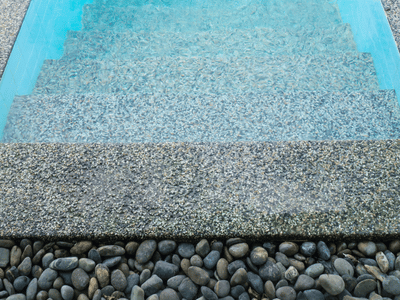
Pebble finishes embed small, natural stones into a reinforced cement matrix, then expose the pebbles through an acid or water wash after application. The result is a textured, natural-looking surface that reads almost like a riverbed underfoot, and it’s genuinely the most durable of the three main finish types.
Pebble’s biggest advantage is longevity. It typically holds up 15 to 20 years or more before needing resurfacing, roughly double what plaster offers, and it resists staining and chemical wear noticeably better because the pebbles themselves, not the cement matrix, are what’s actually exposed to the water.
The tradeoff is texture and cost. Pebble is the most expensive finish upfront, and its textured surface, while comfortable for most swimmers, feels rougher underfoot than plaster or quartz. Families with young children who spend a lot of time sitting or crawling on pool steps sometimes notice this more than adult swimmers do.
Quartz Finishes: The Middle Ground
Quartz finishes blend crushed, colored quartz crystals into a cement plaster base. The result is smoother than pebble but noticeably more durable than standard plaster, with a subtle sparkle that plain plaster doesn’t have.
Quartz typically lasts somewhere in the 12 to 18 year range, positioning it clearly between plaster and pebble on durability, and it sits in the middle on cost as well. For homeowners who want better longevity than plaster without committing to pebble’s texture and price tag, quartz is often the practical answer.
One thing that surprises many homeowners is how much the quartz content itself affects performance, not just appearance. The quartz crystals add real hardness to the surface, which is part of why quartz resists chemical etching and staining better than plain plaster, even though it still shares plaster’s smoother, more familiar feel.
Comparing All Three at a Glance
| Plaster | Quartz | Pebble | |
|---|---|---|---|
| Typical lifespan | 7-10 years | 12-18 years | 15-20+ years |
| Relative cost | Lowest | Mid-range | Highest |
| Surface feel | Smoothest | Smooth, slight texture | Textured |
| Chemistry sensitivity | Highest | Moderate | Lowest |
| Best for | Budget-conscious resurfacing | Balance of cost and durability | Long-term ownership, heavy use |
These are general patterns, not guarantees. Real-world results depend heavily on water balance and installation quality, which affect how close any given finish comes to the top or bottom of its typical range.
How NWA Water Chemistry and Climate Affect Each Finish
Northwest Arkansas doesn’t have the extreme hard water some regions deal with, but our freeze-thaw winters and seasonal swings in pool use still put real stress on a finish, especially plaster. A pool that’s opened and closed each year, rather than run continuously, sees more chemistry fluctuation during startup and shutdown, and plaster’s sensitivity to those swings means it tends to show wear a little faster here than in a climate with a longer swim season.
Pebble and quartz handle that seasonal cycling better simply because their aggregate content is less reactive to the chemistry swings that come with opening and closing a pool each year. If you’re the type of owner who’s diligent about water balance year-round, that difference matters less. If your pool sits closed for several months and startup chemistry tends to run rough for a week or two each spring, the more durable finishes earn their premium a little faster.
Which Finish Makes Sense for Your Situation
More often than not, this decision comes down to two questions. How long do you plan to own the home, and how much do you use the pool?
If you’re resurfacing a pool you plan to sell within five to seven years, plaster is often the more sensible financial choice, there’s little reason to pay for pebble’s 15-plus year lifespan if you won’t be the one benefiting from most of it. If you’re building new or resurfacing a pool you plan to keep for the long haul, quartz or pebble spreads the cost over more years of use and reduces how often you’re dealing with a resurfacing project at all.
Heavy pool use matters too. A pool that sees daily summer use from a large family puts more wear on any finish than one used occasionally for entertaining, and that heavier use tends to make the durability gap between plaster and the aggregate finishes more noticeable, sooner.
If you’re already dealing with gunite pool resurfacing and trying to decide what to replace the old finish with, this is exactly the point in the process where that decision gets made. Our pool resurfacing and replastering team walks through all three options with you on site, since seeing sample chips against your actual pool deck and landscaping makes the choice a lot clearer than looking at swatches in a showroom.
Frequently Asked Questions
Which gunite pool finish lasts the longest?
Pebble finishes typically last the longest, often 15 to 20 years or more, followed by quartz at 12 to 18 years, with plaster generally lasting 7 to 10 years.
Is pebble finish worth the extra cost?
It depends on how long you plan to own the pool. For long-term ownership, pebble’s extended lifespan often offsets its higher upfront cost. For a shorter ownership horizon, plaster or quartz may be more cost-effective.
Does quartz finish feel different from plaster?
Quartz feels smooth, similar to plaster, but with a subtle texture and sparkle from the quartz crystals. It’s noticeably smoother than pebble underfoot.
Can I change finish types when resurfacing, or do I have to match the existing finish?
You can generally switch finish types during a resurface. Many homeowners upgrade from plaster to quartz or pebble specifically because they’re already paying for the resurfacing labor and want the longer lifespan going forward.
Which finish is easiest to maintain?
Pebble and quartz both require less intensive maintenance than plaster, since their aggregate content resists staining and chemical etching better than plain cement.
Does the finish affect pool color, or just texture?
Both. All three finish types are available in a range of colors, but pebble and quartz tend to offer richer, more varied color depth than standard white or light plaster.
Is plaster a bad choice if I want a low-maintenance pool?
Not necessarily bad, but plaster requires closer water chemistry monitoring than pebble or quartz to reach the top of its lifespan range. If low maintenance is the priority, quartz or pebble is usually the better fit.
How much does finish choice affect resale value?
A newer, higher-quality finish like pebble or quartz can be a modest positive for resale, since buyers often view it as evidence the pool has been well maintained and won’t need resurfacing soon.
Do all pool builders offer all three finish types?
Most established builders do, but installation quality varies. Ask specifically about a contractor’s experience with the finish you’re choosing, since application technique affects how close a finish comes to its expected lifespan.
What’s the biggest mistake homeowners make when choosing a finish?
Choosing based on upfront cost alone without factoring in how long they’ll own the pool. A finish that costs less today can end up costing more over a 20-year ownership window if it needs resurfacing two or three times instead of once.
Choosing the Right Gunite Pool Finish for Your Situation
Plaster, pebble, and quartz all do the same basic job, but they get there differently, and the right choice depends more on how long you’ll own the pool than on which one looks best in a sample photo. Plaster keeps costs down now, quartz balances cost and durability, and pebble is the long-term investment for owners who want to resurface as infrequently as possible.
If you’re planning a resurface and want a straight recommendation based on your specific pool and how you use it, contact BC Pools, and we’ll walk you through which finish actually makes sense for your situation.