
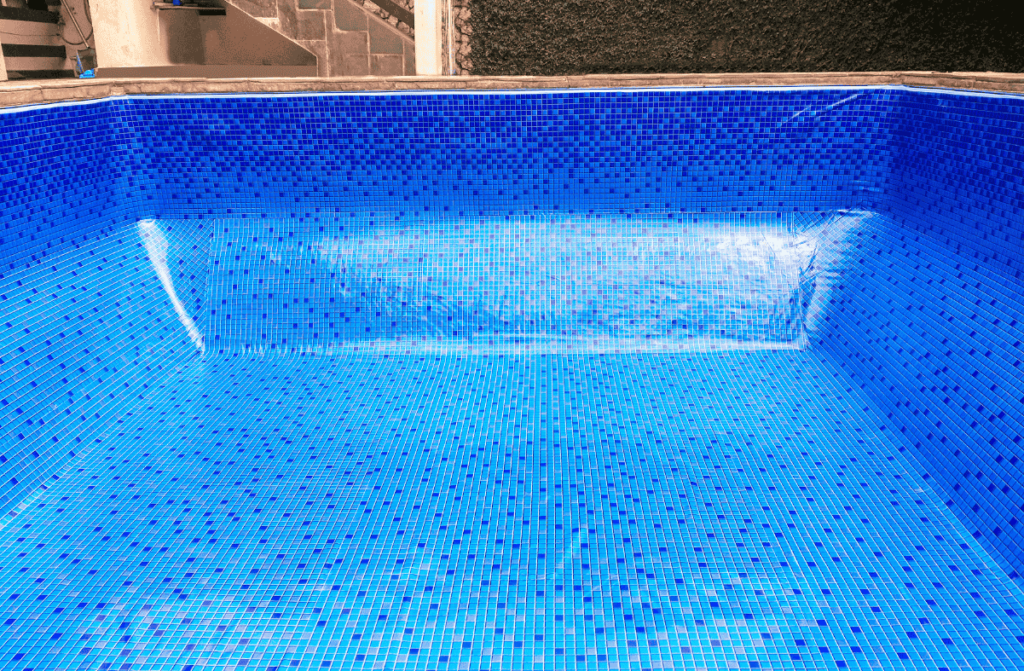
Vinyl liner pool maintenance centers on protecting the liner itself. Keep the water gently balanced and keep sharp or abrasive things away from the vinyl. Never let the water level drop. Gunite and fiberglass tolerate harsher chemistry and rougher tools, but a thin sheet of vinyl does not forgive the same habits.
That difference trips up owners who have maintained other pool types before, or who inherited advice meant for a plaster pool. A stiff brush that is fine on gunite can scuff a liner. A shortcut with chlorine that a fiberglass owner might get away with can leave a bleached patch on vinyl that never goes away. Once you know where a liner is vulnerable, the routine is simple.
Why a Vinyl Liner Is Maintained Differently
A gunite pool has a hard shell with a finish applied over it, and a fiberglass pool has a gelcoat bonded to the shell. In both cases the surface is thick and rigid. A vinyl liner is a flexible sheet, usually only a few dozen mils thick, that hangs in a track at the top of the wall and rests against the floor and sides. Its printed pattern sits on the surface, and everything that touches the water also touches that print.
That design explains nearly every maintenance rule that follows. A liner can be stained or bleached, scratched or punctured, and those problems build slowly and are mostly avoidable. Gunite and fiberglass can be resurfaced or refinished. A liner can only be patched or replaced.
It also helps to remember that the liner is not structural. It holds water and gives you a smooth surface, while the wall panels and floor underneath do the real work. Looking after the liner mostly means not asking it to do more than it was built to do.
Water Chemistry That Protects the Liner
Balanced water is the single biggest factor in how long a liner stays flexible and colorful. Water that stays too acidic is hard on the vinyl and can leave it stiff over time, and water overloaded with sanitizer can fade the print. Water that is too alkaline invites scale and cloudy water, which makes the pool harder to keep clean.
The CDC recommends keeping pool pH between 7.0 and 7.8 with free chlorine of at least 1 ppm, and it advises testing more than once a day when the pool is busy. Many pool pros aim for the middle of that pH range, near 7.4, instead of letting it drift toward either edge. For a home pool that is not in constant use, testing a few times a week during swim season is a practical habit, and daily testing makes sense during heat waves or after a big party.
Calcium hardness matters differently for a liner than for plaster. Gunite can be etched by soft water, so owners of those pools work to keep calcium up. A liner has no plaster to dissolve, but very soft water can still be aggressive toward the vinyl itself, and very hard water leaves scale on the surface. A moderate range, roughly 150 to 250 ppm, is the usual target for vinyl pools.
Total alkalinity acts as the buffer that keeps pH from swinging. If alkalinity is off, pH will bounce around no matter how carefully you adjust it, and every swing is a small stress on the vinyl. Get alkalinity into range first, then fine tune pH.
Add Chemicals the Liner-Safe Way
How you add chemicals matters as much as which ones you add. The classic liner mistake is dropping granular or tablet chlorine into the water and letting it settle on the floor. Undissolved chlorine sitting against vinyl can bleach a spot in a matter of hours, and that spot stays white.
The safer habits are straightforward. Dissolve granular products in a bucket of pool water before they go in, and pour the mixture slowly in front of a return jet. Use a floating dispenser or the skimmer basket for tablets, and never toss them on a step or the floor. Add chemicals one at a time with the pump running, and wait for the water to circulate before adding the next.
Shock treatments deserve extra care. Many owners shock in the evening so the sun does not burn off the chlorine. Dissolve the product first and give it time to disperse, since a concentrated pocket of chlorine near the liner can bleach it.
Brushing and Vacuuming Without Wearing the Vinyl
Liners need cleaning, but they need gentle cleaning. A soft nylon brush is the right tool, and a wire or stiff bristle brush is the wrong one. Brushing a gunite wall with a hard brush is routine. Doing the same to a liner can scratch the print and leave a dull patch.
Vacuums are the same. Use a vinyl-safe head, and keep the hose and pole from dragging across the wall. Robotic cleaners work well on liners, as long as the brushes are soft and the unit is not catching on a wrinkle or a lip near the steps. If a cleaner keeps stalling in one spot, treat that as a hint that something is wrong with the liner’s fit there.
Algae is the other reason people reach for a harder brush. Resist that. Raise the chlorine and brush gently so the chemistry does the work. Keep in mind that a pale ring at the waterline is usually oils and sunscreen, not damage. A non-abrasive cleaner made for vinyl handles that ring better than scrubbing does.
Keep Sharp Things Away from the Liner
Punctures are the most common way a liner fails early, and almost every puncture comes from something that was in or near the pool. Pet claws are a frequent cause, and so are toys with hard edges, loose pool tools and the ends of poles. A ladder or step that is not seated properly can also rub through vinyl over a season.
Most punctures are preventable. Keep pets from jumping or scrambling along the wall, and trim nails if a dog swims often. Rinse and check the pole and vacuum head for sharp edges. Take off watches and rings before jumping in, and keep glass entirely away from the pool area.
Liners are fitted tightly around steps, lights and returns. A fitting that has loosened or an edge that has been chipped can wear the vinyl from behind, so a yearly look at those spots is worth the time.
Water Level Matters More Than You Think
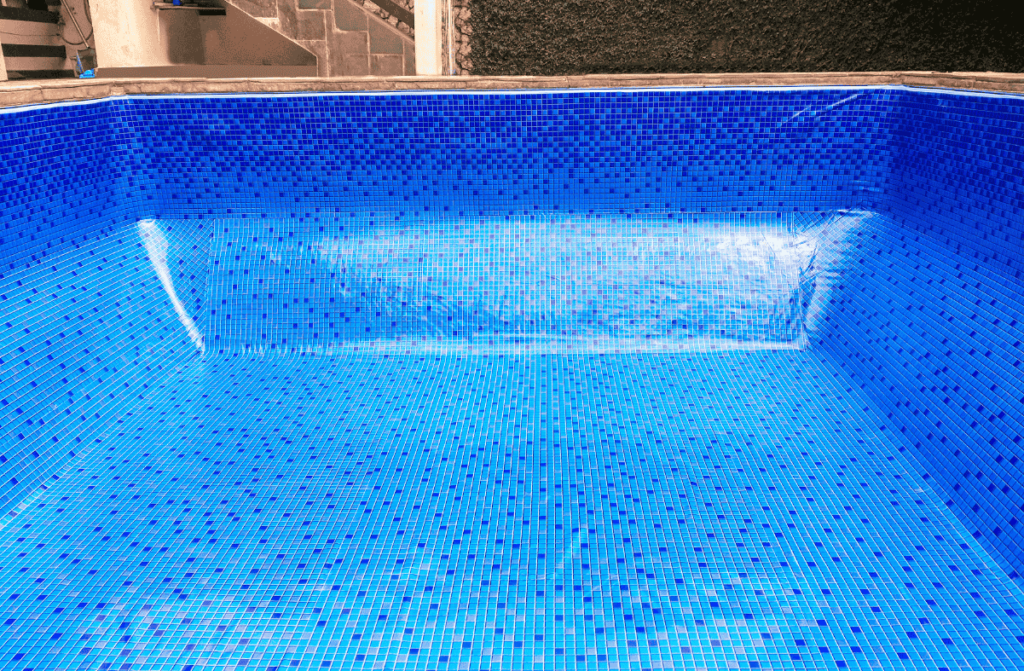
Keeping the water at the right height is a bigger deal for vinyl than for any other pool type. The water holds the liner against the walls and floor. If the level falls too low, the liner can pull away from its track, shrink slightly in cool weather and wrinkle once the pool refills.
A liner also ages faster when the upper part is out of the water. The exposed vinyl gets full sun, and the part that dries repeatedly is the part that cracks first. A level near the middle of the skimmer opening is the usual guide, and it is worth checking after a week of heat or heavy swimming.
Never drain a vinyl pool to clean it or to make a repair without professional guidance. An empty or low pool lets the liner shrink and can shift the walls, and groundwater can push against the structure. If the level keeps dropping on its own, run a bucket test to separate a liner leak from an equipment leak before topping off again and again.
How Vinyl Maintenance Compares with Gunite and Fiberglass
Seen side by side, the three pool types ask for different things. Gunite is forgiving of tools but sensitive to water balance because the plaster can etch or scale. Fiberglass is smooth and low maintenance, but its gelcoat needs gentle products. Vinyl is the most sensitive to sharp objects and the least tolerant of undissolved chemicals.
| Maintenance area | Vinyl liner | Gunite | Fiberglass |
|---|---|---|---|
| Brush type | Soft nylon only | Stiff nylon brush | Soft nylon or fiberglass-safe brush |
| Biggest chemical risk | Undissolved chlorine bleaching the print | Low calcium etching the plaster | Harsh products dulling the gelcoat |
| Calcium hardness goal | Moderate range | Higher range to protect plaster | Lower range to limit scale |
| Water level | Must stay up to hold the liner in place | Can fluctuate with little harm | Can fluctuate with little harm |
| Sharp objects | A real puncture risk | Rarely an issue | Rarely an issue |
| Surface repair | Patch or replace the liner | Resurface the plaster | Refinish or repair the gelcoat |
If you are still deciding between the three, our gunite vs. fiberglass vs. vinyl liner comparison looks at how each type holds up in Northwest Arkansas over the long run, not only at the maintenance side. It also helps to talk with a Northwest Arkansas pool builder who works on all three types, since the right choice depends on your yard, your soil and how much upkeep you want.
What Northwest Arkansas Weather Changes About the Routine
Our summers are long and hot, and that raises chlorine demand. Sun burns chlorine off and heavy swimming uses it up, so a pool that read fine in May can test low by July. During a heat wave, shorten the gap between tests instead of sticking to the usual weekly check.
Spring brings heavy storms, and rainwater dilutes the chemistry while pushing the level up. Retest after a big rain and adjust before you trust the old numbers. Pollen and storm debris arrive at the same time, and leaves left on the floor can leave dark stains on the vinyl if they sit. Scoop them out the same day when you can.
Fall is the other leaf season. Wet leaves under a cover or on the floor over a cold spell are the usual source of stains that show up at spring opening. Clearing the cover and the water before you close saves you that surprise.
A Simple Vinyl Liner Maintenance Schedule
Most of the work fits into a short weekly routine. The monthly and seasonal items catch the slower problems before they turn into repairs.
| How often | What to do |
|---|---|
| Every few days in season | Test pH and free chlorine, then adjust gradually |
| Weekly | Skim, brush with a soft brush and vacuum with a vinyl-safe head |
| Weekly | Check the water level and empty the skimmer and pump baskets |
| Monthly | Test alkalinity and calcium hardness, and check the filter pressure |
| Monthly | Look over the liner for new wrinkles, soft spots or faded patches |
| Each spring | Inspect the liner, steps, lights and returns before opening fully |
| Each fall | Balance the water, clean the liner and close the pool as your installer advises |
A routine like this typically takes an hour or two a week in season. A liner that gets steady, gentle attention outlasts one that gets a heavy dose of chemicals once a month.
Winter Care and Spring Opening
Closing a vinyl pool for winter comes down to keeping the liner protected while it sits idle. Balance the water before you close and clean the liner so stains do not set over the cold months. Follow your installer’s guidance on the water level for the cover you use. Avoid draining the pool to “winterize” it, since an empty liner can shrink and the walls can shift.
In spring, remove the cover carefully and check the liner before you restore the water level and start the filter. Look for new wrinkles, cracks near the waterline and stains under where the cover rested. Catching a small issue in April is far cheaper than finding it in July.
Don’t Ignore Small Wrinkles
A wrinkle that grows each season means the liner is moving, and left alone it can crease and crack. If one keeps coming back after you have checked the water level, get a professional look before it turns into a tear.
When Maintenance Is Not Enough
Even a well kept liner eventually wears out. If the liner feels rough or brittle, or leaks in more than one place, maintenance is no longer the answer. A professional vinyl liner pool repair and replacement inspection can tell you whether a patch will hold or whether the whole liner should be replaced, and it is better to learn that before a small problem becomes a large one.
Frequently Asked Questions
How often should I test the water in a vinyl liner pool?
Test pH and free chlorine every few days during swim season, and daily during heat waves or heavy use. Check alkalinity and calcium hardness about once a month.
What pH is best for a vinyl liner pool?
The CDC recommends a pH between 7.0 and 7.8, and many pool pros aim near the middle, around 7.4. Water that stays too acidic or too alkaline for long is hard on the liner.
Can I use a regular pool brush on a vinyl liner?
Use a soft nylon brush only. Wire or stiff brushes made for plaster can scratch the print and leave dull patches.
Why did my liner get a white spot after I added chlorine?
Undissolved chlorine granules or a tablet likely sat against the vinyl and bleached it. The spot is permanent, so dissolve granular products in a bucket of water first and keep tablets in a floating dispenser.
Should I drain a vinyl pool for winter?
No. An empty or very low pool lets the liner shrink and can shift the walls. Follow your installer’s guidance on water level and use a cover.
How long should a vinyl liner last with good maintenance?
It depends on chemistry, sun exposure and how well the pool is cared for, so condition matters more than age. Steady water balance, a gentle routine and a proper water level give a liner its best chance.
Vinyl Liner Pool Maintenance Made Simple
Vinyl liner pool maintenance is mostly about gentleness. Keep the chemistry close to the middle of the range, add products so they never sit on the vinyl, clean with soft tools and keep sharp objects away. Most important of all, keep the water level where it belongs so the liner stays seated.
If your liner is already showing wear, or you are unsure whether what you see is normal, contact BC Pools and we will take a look at what your pool needs.