
If your gunite pool feels rough underfoot or shows stains that won’t scrub out, it’s telling you the surface has reached the end of its service life. Resurfacing restores the protective layer that keeps your pool watertight and comfortable to swim in, and catching the signs early keeps small problems from turning into structural ones.
We inspect pools all over Northwest Arkansas that are anywhere from five years old to well past thirty, and the surface always tells a story. A pool owner will call us about “rough spots” and by the time we’re standing at the edge with a flashlight, we can usually tell within the first two minutes whether they’re looking at a cosmetic issue or something that needs attention before another swim season passes.
Why Gunite Pool Surfaces Wear Down in the First Place
Gunite is the structural shell of your pool. It’s strong, but it isn’t what you touch when you swim. That’s the interior finish, usually plaster or an aggregate blend like pebble or quartz, and that layer is doing constant battle with water chemistry, UV exposure, and the freeze-thaw cycles NWA winters bring every year.
Here’s the thing about plaster specifically: it’s essentially a thin, porous layer of cement. Every season it’s exposed to chlorine and shifting pH levels, it loses a little bit of its density. The CDC recommends keeping pool pH between 7.0 and 7.8, and staying outside that range doesn’t just affect swimmer comfort, it accelerates how fast plaster etches and breaks down over time. Eventually that erosion becomes visible, and that’s when homeowners start noticing the signs below. Most gunite pools need resurfacing every 10 to 15 years, though water chemistry, winterizing habits, and how heavily the pool is used can shift that window in either direction
Quick Check: Healthy Surface vs. Surface That Needs Resurfacing
| What You Notice | Healthy Surface | Needs Resurfacing |
|---|---|---|
| Texture | Smooth, slightly matte | Rough, gritty, or sandpaper-like |
| Staining | Lifts with brushing and balanced chemistry | Returns within days or has permanently discolored the surface |
| Wall residue | None or minimal | Chalky white film left on your hand |
| Cracks | None, or fine hairline cracks only | Wider cracks with a visible ridge or offset |
| Gunite visibility | Fully covered by finish | Gray shell visible through worn patches |
| Water level | Drops only from normal evaporation | Drops noticeably beyond evaporation |
If you’re checking two or more boxes in the right-hand column, it’s worth having the surface looked at before your next swim season.
Rough or Pitted Texture
This is usually the first thing people notice, often with their feet before their eyes. A healthy plaster surface feels smooth and slightly matte. Once it starts breaking down, it develops a sandpaper-like texture that catches on swimsuits and scrapes bare feet.
One thing that surprises many homeowners is that this roughness isn’t just cosmetic wear. It means the surface has become porous enough that it’s losing its ability to seal properly, which opens the door to staining and algae taking hold in ways a dense, healthy surface would resist.
If you run your hand along the wall near the waterline and it feels gritty rather than smooth, that’s a fair signal the plaster is past its prime.
Stains That Won’t Come Off With Normal Cleaning
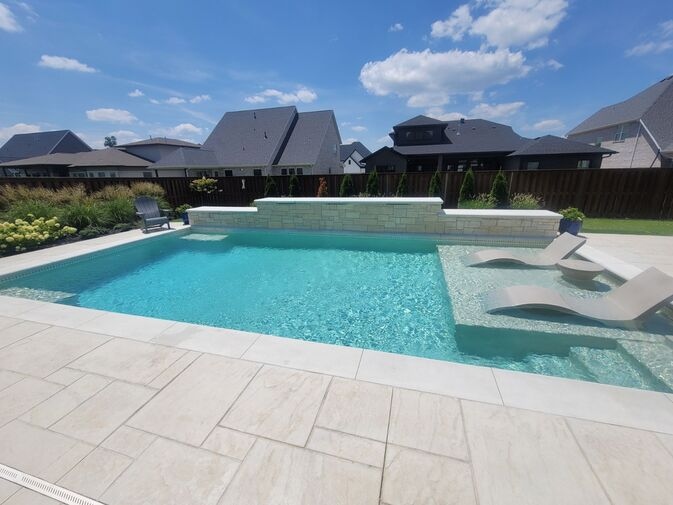
Some staining is completely normal. Leaf tannins and light algae film usually respond to a good brushing and balanced chemistry. The staining that signals resurfacing is different. It keeps returning within days of cleaning, or it’s changed the color of the surface itself in blotchy, uneven patches.
We see this quite often on pools that are otherwise well maintained. The owner is diligent about chemistry and still can’t get the stains to lift, because the problem isn’t the water anymore. It’s that the plaster has become porous enough to absorb minerals and organic material permanently.
Chalky Residue or Calcium Buildup
Run your hand along the pool wall and check your palm. If it comes away with a white, chalky film, that’s calcium leaching out of deteriorating plaster. This happens as the cement binder in the surface breaks down and starts dissolving into the water, which is also part of why the water can look cloudy even when your chemical readings check out fine.
A little chalkiness on an older pool isn’t an emergency. But if it’s a consistent problem every time you clean, it’s a sign the surface has thinned to the point where it’s no longer doing its job.
Cracks in the Surface
Not all cracks mean the same thing, and this is where professional judgment matters more than a homeowner checklist. Hairline cracks that follow the natural curing pattern of plaster are common and usually cosmetic. Wider cracks, especially ones with a slight ridge or offset on either side, are a different story.
If there’s one lesson we’ve learned inspecting pools across NWA, it’s that our clay soil and freeze-thaw winters put more stress on pool shells than most other regions see. Ground movement during a hard freeze can telegraph through the shell and show up as diagonal or spreading cracks in the finish. This is exactly the kind of situation where gunite pool repair needs to happen before any cosmetic work moves forward, because resurfacing over an active structural crack just hides the problem temporarily.
Exposed Gunite
If you can see the gray, rough concrete shell showing through in patches where the finish has completely worn away, resurfacing isn’t optional anymore. Exposed gunite means the protective layer is gone entirely in that spot, and the shell underneath is now taking direct exposure to water and chemicals it was never designed to handle long term.
This is the one sign we don’t recommend waiting on. Every season it’s left exposed increases the risk of deeper deterioration and a more expensive repair scope down the road.
Unexplained Water Loss
A pool naturally loses some water to evaporation, more in the summer heat than you’d think. But if you’re topping off well beyond what evaporation accounts for, and you’ve ruled out equipment leaks, a compromised surface can be the culprit. Cracks and porous plaster create paths for water to escape slowly through the shell.
Believe it or not, this is one of the harder signs for homeowners to catch on their own, because the loss is gradual. We usually recommend the bucket test as a starting point: mark the water level, place a bucket of water on the step at the same level, and compare the two after 24 hours. If the pool has dropped noticeably more than the bucket, it’s worth having someone take a closer look.
Deciding Between Repair and Full Resurfacing
Not every issue on this list means the whole surface needs to go. More often than not, the decision comes down to how widespread the wear is and whether the underlying shell is sound.
A single hairline crack or a small rough patch can sometimes be addressed with a spot repair. But when we’re seeing rough texture combined with persistent staining and chalky residue all at once, that combination usually means the surface as a whole has reached the end of its useful life, and patching one area just means dealing with the next one a season later.
This is a judgment call that’s easier to make in person than over the phone, which is why we always recommend a physical inspection before committing to either option.
What Does Pool Resurfacing Cost?
Pool resurfacing costs $11,000 on average, with most homeowners paying somewhere between $6,000 and $15,000 depending on pool size, condition, and finish choice, according to home services cost data from Angi. Gunite pools tend to land on the higher end of that range since concrete finishes take more time and material than vinyl. Plaster is generally the most budget-friendly finish, running around $5 to $6 per square foot, while pebble and quartz aggregate finishes cost more upfront but tend to hold up longer before the next resurfacing job.
These are national figures, and your actual quote will depend on your pool’s size, current condition, and the finish you choose. The only way to get an accurate number for your specific pool is a site visit, which is something we’re always happy to provide.
What the Resurfacing Process Involves
Once the decision is made, the general process looks like this:
- Draining the pool completely
- Removing the old, deteriorated finish down to the gunite shell
- Repairing any structural issues found underneath
- Applying the new finish in the material you’ve chosen
- A curing period before the pool can be refilled and used again
Timing matters here too. Late summer and fall, once heavy pool use has slowed down, tends to be an ideal window for scheduling pool resurfacing in Northwest Arkansas, since it gives the new surface a full curing period before next year’s swim season.
If you’ve been tracking upkeep costs on your own pool, it’s worth comparing what a resurface runs against what you’d spend patching the same issues year after year. We broke that down in more detail in our post on gunite pool maintenance costs, which is a useful next read if you’re trying to budget for this.
Frequently Asked Questions
How long does gunite pool resurfacing take?
Most resurfacing projects take one to two weeks from draining to refilling, though the finish needs additional curing time before the pool is ready for regular use.
Can I resurface my pool myself?
Resurfacing requires specialized equipment and material handling to get an even, durable finish. DIY attempts often lead to uneven texture or premature failure of the new surface.
Is resurfacing the same as replastering?
Replastering refers specifically to a plaster finish. Resurfacing is the broader term that also covers pebble and quartz aggregate finishes.
How do I know if it’s a repair or a full resurface?
It depends on how widespread the damage is. A single crack or small patch can sometimes be repaired, while widespread roughness, staining, and chalking usually point to full resurfacing.
Does resurfacing fix cracks?
Resurfacing addresses the surface finish, but structural cracks need to be evaluated and repaired first before a new finish is applied over them.
What’s the best finish to choose when resurfacing?
It depends on your budget, how the pool is used, and how much upkeep you want going forward. Plaster is the most affordable option, while an aggregate finish like pebble or quartz costs more upfront but tends to hold up longer.
Will resurfacing change the color of my pool?
Yes, if you choose a different finish color or material, the overall water tone can shift. This is a good opportunity to update the pool’s look if you’ve been wanting a change.
How often should I inspect my pool for these signs?
Twice a year is a good baseline, once when opening the pool for the season and once before winterizing, so any changes get caught early rather than discovered mid-summer.
Can freezing weather cause these signs to appear faster?
Yes. Freeze-thaw cycles put stress on the pool shell and finish, which is part of why NWA pools sometimes show wear sooner than pools in milder climates.
Does water chemistry really affect how long the surface lasts?
It’s one of the biggest factors. Consistently unbalanced pH or chlorine levels accelerate plaster breakdown far more than normal age-related wear does.
Recognizing the Signs Your Gunite Pool Needs Resurfacing
A gunite pool surface doesn’t fail overnight. It gives warning signs first, whether that’s a rough patch under your feet or a hairline crack that’s started to widen. Catching those signs early is what keeps a resurfacing job manageable instead of turning into a bigger structural repair.
If you’re noticing any of these signs in your own pool, contact BC Pools and we’ll take a look and tell you honestly whether you’re looking at a repair or a full resurface.