
Yes, you need a permit to build an inground pool in Northwest Arkansas, regardless of whether you’re going with fiberglass, vinyl liner, or gunite. Pool permits in NWA aren’t optional, and every incorporated city in the region enforces this. What trips homeowners up isn’t the yes or no. It’s figuring out which department to call, what triggers a separate electrical permit, and whether an HOA needs to sign off before the city will even look at an application.
Here’s the thing about permitting in this region: Fayetteville, Bentonville, Rogers, Springdale, and Centerton each run their own process, and none of them hand you the same checklist. We’ve watched homeowners assume that because their neighbor’s permit cleared in ten days, theirs would too, only to find out their city requires an extra step the neighbor’s city doesn’t. Getting this right from day one saves weeks.
Do You Actually Need a Permit?
Almost certainly yes. Every incorporated city in Northwest Arkansas requires a permit for an inground pool, and most treat any pool at a certain depth the same way regardless of material. In Fayetteville, for example, any pool, in-ground or above-ground, with a depth of 24 inches or more requires a building permit. If the pool has a pump, filter, alarm, or any other equipment tied into electrical service, a separate electrical permit is required on top of that.
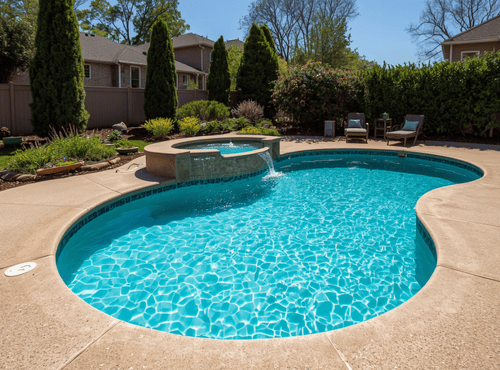
One thing that surprises a lot of homeowners is that the Arkansas Department of Health does not regulate single-family residential pools at all. That agency’s rules apply to public pools, like the ones at a hotel, apartment complex, or community center. Your backyard pool is governed entirely by your city or county building department, not a state health agency. That distinction matters because homeowners sometimes assume there’s a state-level pool inspector involved somewhere in the process. There isn’t, at least not for a private residence.
Requirements can also differ by pool type in a subtle way. A fiberglass shell still needs a permit, but because the structure arrives pre-engineered, there’s typically less for a building official to evaluate structurally compared to a poured gunite shell, which needs steel and concrete inspected in place before it’s covered up.
Bottom line on this one: if you’re building any inground pool in NWA, plan on a permit. The real work is figuring out which office handles yours and what they’ll ask for.
Who You Actually Call in Each City
This is where things get specific fast, and it’s the part most general guides skip past.
Fayetteville handles permitting through its Building Safety division, part of Development Services. Applications go through the Civic Access Portal, and the city also runs a Same Day Permit program for qualifying projects submitted before 2 p.m., though a pool project with electrical and plumbing components typically doesn’t qualify for the express lane.
Bentonville treats pools as a Miscellaneous Permit, a separate category from standard building permits, and typically requires a site plan showing your pool’s setbacks before anything else gets reviewed. Fees are calculated based on the valuation of labor and material rather than a flat rate, so the number you’ll pay depends on your project’s actual cost.
Rogers runs its residential pool permits through its own online portal, and one detail worth knowing before you call around for quotes: the city specifically requires a master electrician, not just any licensed electrician, to pull the electrical permit and handle the pool’s bonding and grounding. If you’re adding a gas line for a pool heater, a master plumber has to pull that permit too. Pool permits in Rogers are only valid for six months, and they become void if work stalls or stops getting inspected during that window, so this isn’t a permit to pull early and sit on.
Centerton stands out because it publishes a dedicated Swimming Pool Permit application separate from its general building permit form, which tells you the city has thought through pool-specific requirements rather than treating a pool like any other structure.
Springdale and Siloam Springs fall under Washington County and Benton County respectively when outside city limits, but incorporated property goes through each city’s own permitting office.
We see this quite often: a homeowner calls the county because that’s the number they found first, only to learn their property is actually inside city limits and needs to go through the city instead. Confirming which jurisdiction you’re actually in, city or county, is worth doing before you fill out a single form.
The Permit Process, Step by Step
The sequence looks similar across NWA cities, even though the pace and paperwork differ.
Site plan and application. You’ll submit a site plan showing the pool’s proposed location relative to property lines, utility easements, your home’s foundation, and any septic system. Some jurisdictions want a scaled plot plan; others accept a hand-drawn version as long as the measurements are accurate. Confirm your city’s specific requirement before drawing anything up, since redoing a plot plan after a rejected submission costs real time.
Plan review. A building official checks the application against local code. This is the step where timeline expectations vary the most. Smaller offices can turn this around in days. Fayetteville, Bentonville, and Rogers can take several weeks during the busy spring season, since everyone applies at once when the weather turns warm. Any revision request restarts the clock, which is exactly why a complete, accurate first submission matters more than people expect.
Permit issuance and fees. Once approved, you pay the permit fee and the permit is issued. Fees are typically calculated based on project value or pool size and commonly fall in a moderate range for a residential pool, though it’s worth confirming the current fee schedule with your specific office rather than assuming.
Inspections during construction. Expect at least a pre-backfill inspection to verify the shell and steel before anything gets covered, a rough electrical inspection, a rough plumbing inspection, and a final inspection. The pool cannot legally be filled or used until the final inspection is signed off.
Final approval. Keep this documentation permanently. You’ll need it if you refinance, sell the home, or add anything to the pool area down the road. An unpermitted pool, or one missing final sign-off, can genuinely complicate a home sale.
The truth is, none of these steps are difficult on their own. What causes delays is skipping ahead, assuming a step doesn’t apply, or submitting incomplete paperwork the first time around.
HOA Review: The Step Most Guides Skip
If your property sits inside a homeowners association, that review is a separate track from city permitting, and it’s not optional just because your design already meets code. Many HOA communities across this region, including several neighborhoods around Bella Vista, Bentonville, and Rogers, require their own architectural or design approval before you can move forward with a city application. Requirements differ significantly from one HOA to the next, so this is worth confirming directly with your specific community rather than assuming based on a neighbor’s experience.
One thing that surprises many homeowners is that HOA review and city permitting don’t automatically run on the same timeline. Some homeowners assume they can submit to both at once. In practice, some cities want proof of HOA approval as part of the application packet, which means starting with the city before the HOA is settled can mean submitting twice.
If you’re not sure whether your property has an HOA, or whether that HOA has pool-specific rules, your deed or closing paperwork will usually say, and a quick call to the HOA’s management company clears it up fast.
Contractor Licensing and the Owner-Builder Question
Arkansas actually lists “Swimming Pools, Spas” as its own specialty classification under the Arkansas Contractors Licensing Board, not just a generic contractor label. Before signing anything, ask for that license number and verify it through the board’s public search at labor.arkansas.gov. A contractor who can’t produce one, or hesitates when asked, is telling you something worth paying attention to.
Some homeowners consider pulling the permit themselves and acting as their own general contractor, coordinating excavation, electrical, and plumbing subcontractors independently. Arkansas generally allows this for a primary residence, though eligibility and paperwork vary by city. That said, Fayetteville’s own building department openly discourages homeowners from pulling a permit and then hiring separate subcontractors on their own, since the person who signs the permit application is the one ultimately responsible for the work meeting code. If a subcontractor’s work fails inspection, that responsibility lands on the homeowner, not the sub.
More often than not, homeowners who go this route underestimate how much coordination it takes to sequence excavation, steel, plumbing, electrical, and inspections without a general contractor managing the calendar. It can work. It just requires a level of hands-on project management that a lot of people don’t fully anticipate going in.
What Inspectors Are Actually Looking For
Permit review and inspections touch several systems, not just the hole in the ground.
Electrical. All metal components and pool equipment need proper bonding and grounding, and every pool-area outlet needs GFCI protection. This is inspected separately from the general construction review, and it’s one area where hiring a licensed electrician isn’t optional.
Plumbing. Pool plumbing has to meet the Arkansas Plumbing Code, and drain covers must meet federal anti-entrapment standards under the Virginia Graeme Baker Pool and Spa Safety Act. Inspectors check this specifically during the plumbing rough-in stage, before anything gets buried or covered.
Barriers and fencing. Arkansas follows International Residential Code guidance on this, generally requiring a barrier at least four feet high with no more than four inches of open space, whether that’s the gap between vertical elements or the gap between the bottom of the barrier and the ground. Exact requirements, including whether your home’s exterior wall can count as part of the barrier, are set locally, so confirm specifics with your city rather than assuming a fence you’ve seen elsewhere meets your requirement.
Setbacks. Most cities require minimum distances from property lines, utility easements, your home’s foundation, and any septic system. This is worth confirming before you finalize where the pool sits in your yard, not after excavation is scheduled.
If there’s one lesson we’ve learned watching homeowners go through this, it’s that the barrier and setback requirements are the two most commonly misunderstood parts of the whole process, mostly because people assume a fence they’ve seen at a friend’s house automatically meets code everywhere.
What Actually Causes Delays
A few things reliably slow a permit down, and most of them are avoidable.
Incomplete applications are the single biggest cause of delay. Missing a plot plan detail, an unclear setback measurement, or a missing HOA approval letter sends the whole thing back to the start of the queue rather than just holding up one piece of it.
Peak season backlogs are real. February through June is when most NWA homeowners apply, which means review times stretch out right when everyone wants to start. Submitting in late fall or winter, when offices are slower, can genuinely mean faster turnaround, even though it feels backward to plan a summer pool build in January.
Property survey issues come up more than people expect, especially on older lots where property lines were never clearly documented. If your property hasn’t been surveyed recently, budget time for that step before you can finalize a site plan.
None of this means the process is unpredictable. It means the homeowners who move through it fastest are the ones who ask their specific city’s office the right questions before submitting, rather than assuming their neighbor’s experience will match their own.
Frequently Asked Questions
Do I need a permit for an above-ground pool in Northwest Arkansas? Often yes, depending on depth and your specific city. Fayetteville, for example, requires a permit for any pool at or above 24 inches deep, in-ground or above-ground. Confirm with your local building department before installation.
Does the State of Arkansas inspect residential pools? No. The Arkansas Department of Health regulates public pools, not single-family residential pools. Your city or county building department handles all permitting and inspection for a backyard pool.
Can I pull my own pool permit as a homeowner in Arkansas? In most NWA cities, yes, for your primary residence. However, some building departments, including Fayetteville’s, discourage homeowners from pulling their own permit and then hiring separate subcontractors, since the permit holder carries the responsibility if something fails inspection.
Do I need HOA approval before applying for a city pool permit? If your property is inside an HOA, likely yes, and many communities require this approval before the city will process your application. Requirements vary significantly by community, so check directly with your HOA early rather than assuming.
Does Rogers really require a master electrician for pool wiring? Yes. Rogers specifically requires a master electrician, not just any licensed electrician, to pull the electrical permit and handle the pool’s bonding and grounding. A master plumber is also required if you’re adding a gas line for a pool heater.
What inspections happen during a pool build in NWA? Expect at minimum a pre-backfill inspection, rough electrical, rough plumbing, and a final inspection before the pool can legally be filled and used.
Does my pool need a fence to pass inspection? Yes, in nearly all cases. Arkansas follows International Residential Code guidance requiring a barrier at least four feet high with limited gap sizes. Your specific city confirms exact requirements, including whether part of your home can count toward the barrier.
Do I need a licensed contractor to build a pool in Arkansas? You need a contractor licensed through the Arkansas Contractors Licensing Board if you’re hiring a company to build the pool. Homeowners acting as their own general contractor on a primary residence have a separate path, though it comes with more responsibility.
What causes the most pool permit delays in NWA? Incomplete applications and peak season backlogs are the two biggest factors. Missing a plot plan detail or an HOA approval letter typically causes more delay than any single city’s normal review time.
Does a septic system affect where I can put my pool? Yes. Most NWA cities require a minimum setback distance from septic systems and drain fields, which needs to be confirmed before finalizing your pool’s location in the yard.
The Bottom Line
Every inground pool in Northwest Arkansas needs a permit, and the type of pool you choose matters less to that process than which city you’re building in and whether an HOA is involved. Fayetteville, Bentonville, Rogers, Springdale, and Centerton each handle applications a little differently, and confirming the right office, the right documentation, and any HOA requirement before you apply is what actually keeps a project on schedule.
If you’re planning a pool build anywhere in Bella Vista, Bentonville, Fayetteville, Rogers, Centerton, Farmington, or Siloam Springs, BC Pools NWA has walked hundreds of homeowners through exactly this process and knows what each city’s office tends to ask for.
Contact us to talk through what permitting looks like for your specific property before you submit anything.