
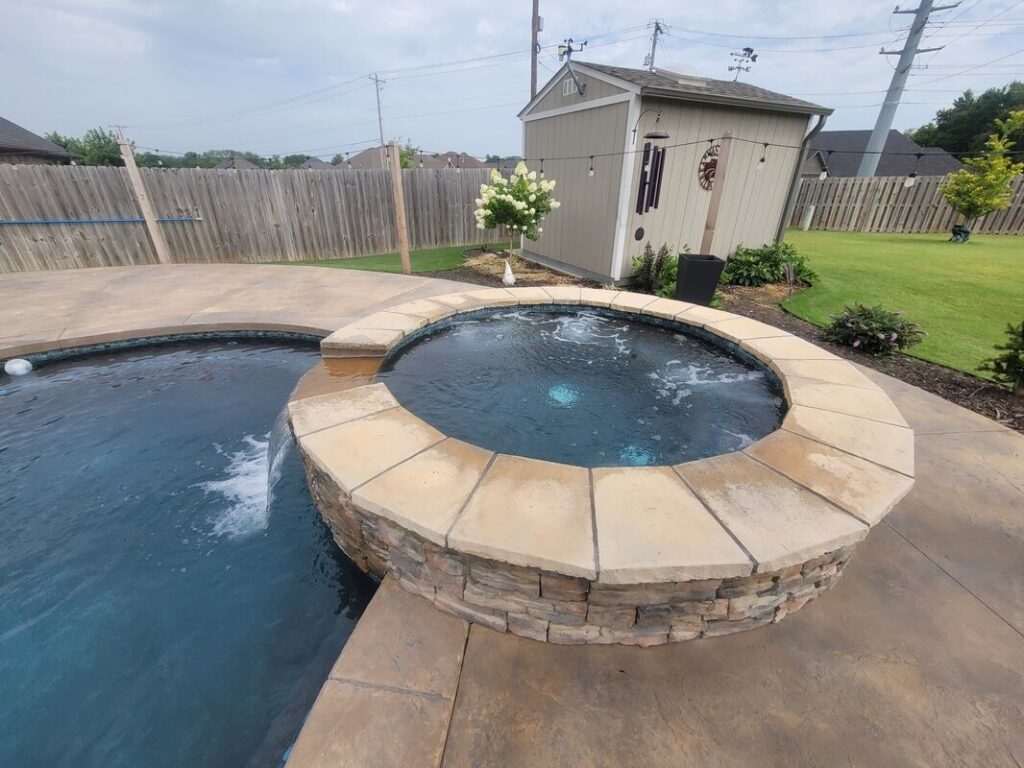
A well-maintained gunite pool can last 50 years or more. But “well-maintained” is doing a lot of heavy lifting in that sentence.
What most homeowners really want to know is not just the lifespan number, but whether this investment makes sense for their situation, and what they are actually signing up for over the next several decades. Gunite pool lifespan is genuinely impressive, but it comes with a real maintenance commitment. We’d rather lay that out honestly upfront than have you surprised five years in.
What Is a Gunite Pool and Why Does It Last So Long?
Gunite is concrete, specifically, a dry concrete mix that gets sprayed through a hose under pressure over a reinforced steel framework. The result is a dense, thick shell that conforms to whatever shape the excavation was dug to. No liner, no seams, no mold limitations. Just concrete and rebar.
That’s why the shell itself is so durable. It’s not a manufactured product with a warranty clock ticking. It’s a structural concrete form that, if built correctly and cared for properly, will outlast everything else on the property, and that usually comes down to how well it’s designed and built by an experienced gunite pool builder in Northwest Arkansas.
What it is not is maintenance-free. Fiberglass pools have a smoother, non-porous surface that resists algae and doesn’t need replastering. Gunite’s concrete surface is porous, which means water chemistry matters more, brushing matters more, and you’ll hit major maintenance milestones that fiberglass owners won’t. That’s the honest trade-off. The shell outlasts everything, but it requires more active management to get there.
Gunite Pool Lifespan: What to Realistically Expect
In our experience building and servicing pools in Northwest Arkansas, here’s what we tell homeowners:
The structural shell – 50 years or more with proper care. We’ve seen well-maintained gunite pools in this area pushing 40 years and still in greate shape.
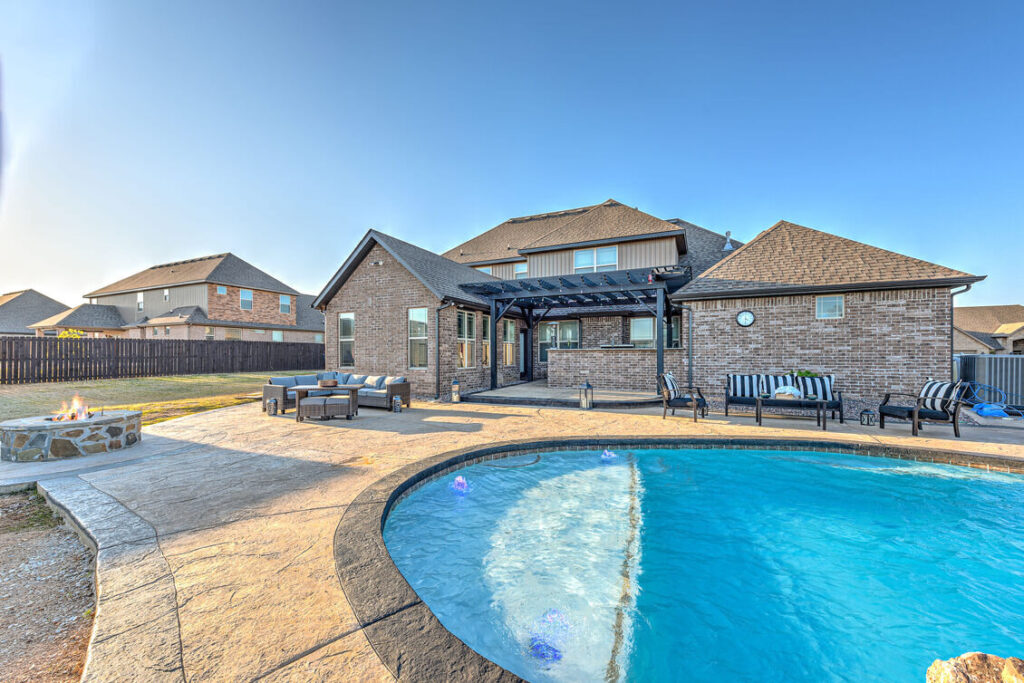
The plaster finish – this is the layer you see and touch, and it typically needs to be replaced every 10–15 years. It is not a flaw in the design; it is a consumable surface. How long yours lasts depends almost entirely on how the water chemistry is managed. We’ve seen pools that needed replastering at 7 years and pools that made it to 18. The difference was almost always the water.
Equipment – pumps, heaters, filters; these do not last 50 years. Budget for replacement on a separate timeline (more on this below).
The other factor we always flag for clients in this area: the Arkansas climate conditions affect lifespan. The heat accelerates chemical consumption in summer. Hard water causes calcium scaling on gunite surfaces. Ozarks soil can shift. These aren’t dealbreakers; they’re just regional realities that inform how you maintain the pool.
Cost of Owning a Gunite Pool Over Time
This is the part of the conversation most pool salespeople skip. We don’t.
Annual maintenance costs in this area typically run $1,200–$3,000 per year, depending on pool size, whether you’re doing chemical management yourself or paying for service, and what equipment needs attention. That range includes chemicals, brushing, and a professional inspection.
This lines up with broader U.S. industry data showing that most inground pool owners spend roughly $1,200 to $3,000 annually on maintenance depending on climate, usage, and service level.
Replastering is the biggest single-expense milestone. In Northwest Arkansas, the budget is roughly $10,000–$20,000, depending on pool size and the finish you choose. That hits every 10–15 years.
Equipment replacement should be treated as a capital reserve, not a surprise. Plan to spend $3,000–$8,000 on equipment replacements over any given 10-year window.
We’re not trying to talk you out of a gunite pool; we build them because they’re worth it for the right homeowner. But gunite does cost more to maintain year-over-year than fiberglass. The trade-off is a fully custom pool with a shell that can genuinely outlast you. If that trade-off makes sense for your situation, great. If it doesn’t, we’ll tell you that too.
A Gunite Pool Issue We Saw in Bentonville
A few years back, we got a call from a homeowner in Bentonville who’d noticed some hairline cracks along the floor of his pool. He’d assumed it was normal settling; the pool was about 12 years old, and had been keeping an eye on them for a season or two before finally calling us.
When we came out to inspect, the cracks had already allowed water to begin migrating behind the shell. Not catastrophic yet, but we were looking at the early stages of what becomes a very expensive structural repair if you let it go another season or two. We sealed the cracks, treated the affected areas, and restored the surface before it could progress.
If he’d waited another year, we’d have been talking about a job that cost three to four times as much.
That story captures something we want every gunite pool owner to understand: with concrete pools, small cracks are not a cosmetic issue. They are a timeline. The sooner you address them, the cheaper and easier the fix.
Warning Signs Your Gunite Pool Needs Attention
Most problems with gunite pools are cheap to fix early and expensive to fix late. Here’s what to watch for:
Rough or sharp surface texture
When the plaster starts breaking down, you’ll feel it before you see it. Swimmers will notice their feet getting scraped. That roughness also means the surface is becoming more porous, which accelerates every other problem.
Staining that won’t brush off
Stubborn stains are often mineral deposits or algae getting into degraded plaster. If brushing and shocking don’t clear it, the surface itself may need attention.
Unexplained water loss
Some evaporation is normal – roughly 1/4 inch per day in summer. If you’re losing more than that consistently, investigate. Don’t assume it’s evaporation.
Visible cracks
Hairline or otherwise, don’t watch and wait. Get them sealed. (See the story above.)
Equipment working harder than usual.
If your pump is cycling more frequently, your heater is struggling to hold temperature, or your energy bills are climbing, something is off. Equipment stress is often a symptom of a larger issue.
Etching or pitting on the floor and walls.
This is what aggressive water chemistry looks like after years of neglect. Once the plaster surface gets pitted, it holds algae and resists cleaning.
Gunite Pool Maintenance: What You Actually Need to Do
Every week: Test and balance water chemistry – pH should stay between 7.4–7.6, chlorine between 1–3 ppm, alkalinity between 80–120 ppm, and calcium hardness between 200–400 ppm. Brush the walls and floor. This is the step most homeowners skip, and it’s usually what we see causing buildup problems down the road.
Every month: Inspect skimmer baskets, return jets, and visible fittings. Look for early signs of staining or surface changes while they’re still easy to address.
Every year: Professional inspection. Check for cracks, evaluate plumbing integrity, and assess equipment performance. An hour of inspection time can catch $10,000 problems before they become $10,000 problems.
Every 10–15 years: Replastering milestone (see next section).
If you’re in Northwest Arkansas and want help staying on top of the maintenance schedule, [LINK TO SERVICE PAGE] for our service options.
When It is Time to Replaster Your Pool
Replastering isn’t a repair; it’s a scheduled part of owning a gunite pool. When the surface gets rough, stains persistently, fades noticeably, or starts holding algae despite proper chemistry, it’s time.
The process: the pool gets drained, the old plaster surface is chipped out, and a new finish is applied. From drain to refill, most replastering jobs take 1–2 weeks, depending on pool size and finish choice.
Finish options:
- Standard white plaster – the baseline, lowest cost, shows staining more readily
- Quartz aggregate – more durable, better stain resistance, mid-range cost
- Pebble finishes (Pebble Tec, etc.) – longest-lasting surface, best texture and appearance options, highest cost
In our experience in Northwest Arkansas, replastering runs roughly $10,000–$20,000, depending on pool size and finish. Quartz and pebble finishes cost more upfront but typically extend the time between replastering jobs – sometimes significantly.
The biggest factor in how long your plaster lasts? Water chemistry, specifically, calcium hardness and pH. Low calcium levels cause the water to leach calcium from the plaster itself. High pH causes scaling. Both destroy plaster faster than anything else.
Pool Equipment Lifespan Breakdown
The shell lasts 50 years. The equipment doesn’t, and homeowners need to budget for them separately.
- Pump: 8–12 years. Variable speed pumps tend to last longer and cut energy costs meaningfully.
- Sand filter media: Replace every 5–7 years. Cartridge filters every 2–3 years.
- Heater: 8–12 years, depending on use frequency and water chemistry.
- Automation/control systems: 10–15 years.
- Salt chlorinator cell (if applicable): 3–7 years.
Keep records of installation dates for all equipment. Equipment doesn’t fail on a schedule, but it does fail, and knowing how old something is helps you budget proactively rather than react in a panic when the pump dies on the Fourth of July.
Common Mistakes Homeowners Make
Not sealing cracks early. We’ve covered this. Don’t watch and wait.
Ignoring chemical balance. This damages the plaster surface faster than anything else. Test every week. In Arkansas summers, test twice a week in July and August – heat burns through chlorine faster than most homeowners expect.
Running the pump on the wrong schedule. Running a single-speed pump 24 hours a day wastes money. Running it too few hours allows water to stagnate. Find the right balance for your pool’s volume and bather load.
Skipping winterization. This one costs NWA homeowners real money every year. Freeze damage to plumbing and equipment is common when pools aren’t properly closed before winter temperatures arrive. Don’t gamble on a mild winter.
Waiting too long to replaster. Once the surface goes porous, problems compound. Algae takes hold faster. Staining becomes harder to reverse. Chemistry becomes harder to balance. Replaster on schedule, not in crisis mode.
Over-shocking the pool. Too much of a good thing strips the plaster. Shock when needed, at the right dose – not reflexively every week.
Seasonal Relevance and Northwest Arkansas Specifics
Arkansas summers hit pool water hard. Heat accelerates chlorine consumption significantly, and you’ll need to test more frequently, especially July and August. What works as a weekly testing schedule in May won’t be enough mid-summer.
Hard water is a real issue in NWA. Calcium scaling on gunite surfaces is something we see regularly, and it’s manageable with proper calcium hardness maintenance (stay in that 200–400 ppm range) and periodic acid washing when buildup accumulates.
The clay-heavy soil in the Ozarks means the ground moves, especially through wet and dry cycles. This can affect pool shell stability over time. It’s not a reason not to build a gunite pool here; it’s a reason to inspect annually and take cracks seriously when they appear.
Winter closing is non-negotiable in Bentonville. Freeze damage to plumbing and equipment happens when pools aren’t properly closed, and it’s expensive. Don’t skip this step.
Best time to build: Fall or early winter. You’ll avoid summer backlogs, and you’ll be swimming by Memorial Day.
Best time to replaster or do major work: Late fall before closing, or early spring before the season ramps up.
Gunite vs. Fiberglass vs. Vinyl: An Honest Comparison
We build gunite pools, so you might expect us to tell you gunite wins. Here’s a straight answer instead.
Gunite: Longest lifespan, fully custom shape and size, higher maintenance commitment, higher long-term costs. Best for homeowners who want exactly what they want and are willing to maintain it properly.
Fiberglass: Lower maintenance, faster installation, limited shape and size options. A legitimate choice for homeowners who want a lower-maintenance pool and can live with the available configurations.
Vinyl liner: Lowest upfront cost, but liner replacement every 7–10 years adds up. Shorter overall lifespan than gunite or fiberglass.
For the terrain and soil conditions in Northwest Arkanas, gunite tends to hold up well long-term – the structural flexibility of a custom concrete shell suits Ozarks ground conditions better than some alternatives. But the right pool is the one that fits your situation. We’ll give you a straight answer on all three if you ask.
Permits & HOA Considerations in Arkansas
Most cities in NWA, Bentonville included, require a building permit for pool installation. That’s not a formality; it triggers inspections that protect you as the homeowner. Pull permits before you dig. We’ve seen projects go sideways when people skip this step, and the cost of correcting it after the fact is always higher than doing it right initially.
HOA rules vary significantly across NWA neighborhoods. Fencing requirements, setbacks from property lines, pool cover mandates, and aesthetic restrictions all differ by community. Review your HOA documents before you commit to a design, and confirm with the HOA directly if anything is unclear.
Frequently Asked Questions
How long do gunite pools last?
The structural shell can last 50 years or more with proper care. The plaster finish needs to be replaced every 10–15 years, and equipment has its own separate replacement timeline.
How often does a gunite pool need to be replastered?
Typically, every 10–15 years, though water chemistry management is the biggest variable. Poorly maintained water chemistry can cut that timeline nearly in half.
Are hairline cracks in a gunite pool normal?
Very minor surface crazing can occur, but any crack that penetrates the plaster layer should be evaluated and sealed promptly. Don’t watch and wait, it’s a timeline, not a cosmetic issue.
How much does gunite pool maintenance cost per year?
In Northwest Arkansas, realistic annual costs run $1,200–$3,000, depending on pool size and whether you’re managing chemicals yourself or using a service.
What’s the difference between gunite and shotcrete?
Both are pneumatically applied concrete. Gunite uses a dry mix (water is added at the nozzle); shotcrete uses a wet mix. Both produce comparable results when properly applied. The terms are often used interchangeably in the industry.
Is a gunite pool worth it compared to fiberglass?
Depends on your priorities. If you want a fully custom shape, maximum lifespan, and are willing to maintain it properly, gunite is worth it. If you want lower maintenance and a faster install, fiberglass is a legitimate alternative. Neither answer is wrong.
Ready to Talk?
If your gunite pool is showing warning signs like rough surfaces, cracks, unexplained water loss, or equipment issues or if you’re planning a new build anywhere in Northwest Arkansas, take a look at our gunite pool builder services. We’ll give you a straight answer on what’s going on and what it takes to fix it.