
Outdoor pool kitchens and built-in grills are a highlight of many backyard spaces in NWA. They allow homeowners to entertain guests, enjoy family meals, and create a functional extension of indoor living space. However, winter in Northwest Arkansas can bring challenges that may damage these outdoor features if they are not properly cared for. Freezing temperatures, heavy rain, ice accumulation, and moisture can all affect the durability of appliances, countertops, cabinets, and other components. Understanding how to protect your outdoor pool, kitchen, and grill during the colder months is essential to ensure your equipment remains functional and safe for years to come.
Winter weather is often unpredictable in NWA. Even mild winters can have sudden cold snaps that bring freezing temperatures overnight. Moisture from rain or ice can seep into cabinets and cracks, while metal appliances can rust if left unprotected. Homeowners who do not take preventive measures may face costly repairs in spring or even shortened appliance lifespans.
Why Winter Weather Affects Outdoor Kitchens and Grills
Outdoor kitchens and grills are designed to withstand some exposure to the elements, but winter conditions in NWA present unique challenges. Moisture from rain and ice can seep into cabinets, countertops, and appliance housings, causing warping, cracking, or rotting. Freezing temperatures can expand water trapped in small cracks or plumbing lines, potentially damaging sinks, faucets, or gas lines. Cold and damp conditions can accelerate rust and corrosion on stainless steel, cast iron, and other metal components.
Heavy rainfall common in NWA winters can pool around outdoor kitchens or beneath built-in grills, increasing the risk of structural damage. Without proper drainage and protective measures, moisture may seep into the foundation of cabinets or under appliances, creating hidden problems that may not be apparent until spring. By preparing for these conditions, homeowners can avoid costly repairs and maintain a functional and safe outdoor space.
Examples of Materials and How Winter Affects Them
Understanding the materials in your outdoor kitchen is important for winter protection:
Countertops:
Granite is durable but can crack if water seeps into small fissures and freezes. Concrete is susceptible to chipping and surface cracks if water penetrates. Research shows that repeated freeze-thaw cycles create microcracks and weaken materials like concrete and stone, which explains why unprotected countertops and masonry can be damaged during winter. Applying a waterproof sealant and covering the surface is recommended. Tile grout lines can absorb water and crack during freezes. Inspect tiles for loose pieces and seal grout before winter.
Cabinets:
Wooden cabinets can warp, rot, or swell from moisture. Protective coatings or waterproof covers are essential. Composite cabinets are more resistant to moisture but can still be damaged by heavy rain or ice. Ensure proper drainage and cover surfaces.
By knowing how materials react to freezing and moisture, homeowners can take targeted preventive steps to extend the life of their outdoor kitchens.
Grill and Appliance Specifics
Different types of grills and appliances require slightly different winter care:
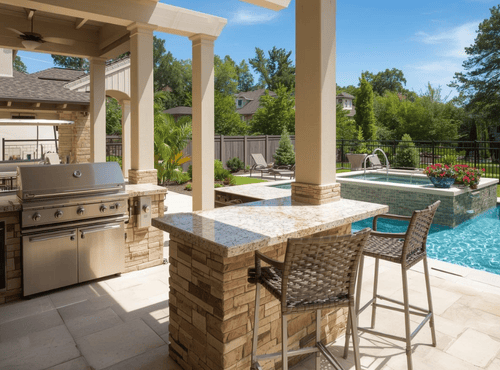
Gas grills: Remove propane tanks and store indoors if possible. Disconnect gas lines to prevent leaks and freezing. Clean burners, grates, and trays thoroughly, and apply a protective coat to prevent rust.
Electric grills: Ensure all electrical connections are unplugged and protected from moisture. Store small, removable components indoors.
Ice makers and built-in beverage coolers: Drain all water lines completely to prevent freezing and bursting pipes. Wipe down interiors and leave doors slightly open to prevent mold. Cover appliances with waterproof, insulated covers if they cannot be moved indoors.
Understanding appliance specifics ensures that winter protection is effective and prevents costly repairs.
DIY vs Professional Guidance
Some winter protection tasks are safe for homeowners to handle themselves, while others are best left to a professional pool builder:
DIY Tasks: Cleaning grill grates and trays, draining sinks, ice makers, and small water lines, covering countertops and cabinets with tarps, and inspecting visible surfaces for cracks, rust, or water damage.
Professional Tasks: Disconnecting or draining complex plumbing lines, servicing heaters, built-in ice makers, or beverage coolers, applying long-term waterproof sealants on countertops and cabinets, inspecting gas lines, regulators, and valves.
Inspecting Your Outdoor Kitchen Before Winter
A thorough inspection before winter sets the foundation for effective protection. Examine countertops for cracks or chips, check cabinets for signs of rot or loose hinges, inspect appliances, including grills, burners, ice makers, and coolers, assess plumbing and sinks for leaks or corrosion, and verify proper drainage to avoid water pooling near cabinets or appliances.
Document any issues and plan for repairs before the first freeze. Early detection prevents minor problems from escalating.
Cleaning and Preparing Appliances
Proper cleaning protects your investment. Remove all grease, food residue, and debris from grills and burners. Drain water from sinks, ice makers, and beverage coolers. Apply protective coatings to metal surfaces to prevent rust. Store removable appliance parts indoors to protect them from moisture and freezing temperatures.
Protecting Surfaces and Cabinets
Use waterproof tarps or fitted covers for countertops and appliances. Apply sealants or waterproof coatings to wood or composite cabinets. Elevate portable appliances to prevent water contact and damage.
Winter Covers for Grills and Appliances
Invest in heavy-duty winter covers suitable for grills and outdoor appliances. Secure covers with straps or weights to prevent wind damage. Consider removable insulation blankets for appliances during extreme cold.
Preventing Rust and Corrosion
Apply anti-rust sprays or oils to metal surfaces. Keep appliances dry and ventilated under covers. Avoid storing wet or combustible materials in cabinet spaces.
Regular Maintenance During Winter
Check covers after storms or snowfall. Gently remove ice accumulation from surfaces and appliances. Test gas and electrical connections periodically to ensure safety. Monitor drainage and remove debris blocking water flow.
Benefits of Proper Winter Protection
Extends appliance and surface life. Saves on costly spring repairs. Prevents safety hazards and liability issues. Ensures your outdoor kitchen is ready for immediate use in spring.
Conclusion
Winter in NWA can be tough on outdoor pool kitchens and built-in grills. Freezing temperatures, ice, rain, and moisture can damage countertops, cabinets, grills, and plumbing if not properly cared for. By understanding the materials in your kitchen, following appliance-specific winterization steps, performing DIY tasks safely, and relying on professional guidance when needed, homeowners can protect their backyard investments and enjoy them for years to come.
For expert assistance, BC Pools, your trusted pool builder in Northwest Arkansas, can help winterize your outdoor kitchens and grills and provide tailored advice to protect your equipment during winter.
Contact us today to ensure your outdoor pool area stays safe, functional, and ready for enjoyment all year long.