
Winter catches a lot of property managers off guard, not because they don’t know freezing temperatures are coming, but because a commercial pool is a different animal than the backyard pool most people picture. Bigger pumps, more plumbing runs, multiple filtration lines, and a lot more exposure if something goes wrong. We’ve walked into more than one equipment room in January where a cracked pump housing turned a $400 fix into a $3,000 one, simply because nobody drained it before the first hard freeze. A clear winter risk management plan protects your facility and ensures a smooth reopening when warm weather returns.
If you’re running a hotel, apartment community, gym, school, or HOA pool anywhere in Washington or Benton County, this is worth reading before the next cold snap hits.
Why Commercial Pools Carry More Winter Risk
Scale is the issue. A residential pool might have one pump and one filter. A commercial facility often has redundant pumps, larger heaters, longer plumbing runs between the equipment pad and the pool shell, and sometimes a secondary spa system tied into the same lines. Every one of those components holds water, and every bit of that water expands when it freezes. This is exactly why commercial pool winter risk management looks different from a simple residential winterizing checklist — more components means more places for something to go wrong, and more cost when it does.
There’s also a liability layer that residential owners don’t deal with. A closed commercial pool still falls under your responsibility as a property manager. If a resident slips on an icy deck near an unlocked gate, or a cover collapses under snow load and someone gets hurt investigating it, that’s on you regardless of whether the pool was “closed for the season.”
What Northwest Arkansas Winters Actually Do to a Pool
Our winters aren’t brutal by northern standards, but they’re inconsistent, and that inconsistency is what causes damage. A 55-degree afternoon followed by a 19-degree night isn’t rare here between December and February. That freeze-thaw cycling is harder on concrete and plaster than a steady deep freeze would be, because the material keeps expanding and contracting instead of just locking down once.
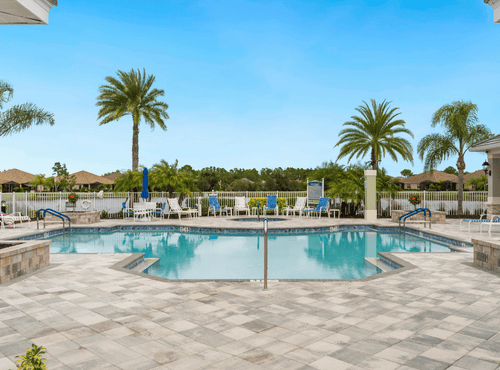
We see this most in older gunite shells built before 2010, where hairline cracks that were invisible in October show up as visible surface lines by March.
Where the Damage Actually Shows Up
Cracked pump housings and burst underground lines are the expensive ones, since repair often means excavation. Heater exchangers are close behind. Commercial heaters run $4,000 to $9,000+ to replace depending on BTU output, and a frozen heat exchanger is one of the most common reasons we get called out for emergency spring repairs.
Tile and coping separation is more common than people expect. Water sits behind coping stones, freezes, and pushes the stone loose over a winter or two. It’s rarely dramatic in the moment, just a slow loosening you don’t notice until you’re doing a spring walkthrough and half the coping along one side rocks when you step near it.
Fiberglass shells handle the freeze-thaw cycling better than gunite, but the surrounding concrete deck and plumbing connections are just as exposed either way.
Draining Equipment the Right Way
This is the step that gets skipped most often, usually because someone assumes the maintenance crew already handled it. Pumps and filters have internal chambers that hold water even after the main drain valve is open. Drain plugs need to actually come out, not just get loosened, and they should be stored somewhere they won’t get lost before spring startup.
Heaters need their own shutdown procedure. Water trapped in the heat exchanger coil is what cracks it, and that’s not a visible failure until you fire the heater back up in April and water’s leaking out the bottom.
Water Chemistry Doesn’t Take a Winter Break
A closed pool is not a pool you can ignore for four months. pH drift, calcium buildup, and sanitizer breakdown still happen, just more slowly. We recommend monthly testing minimum for commercial facilities, even fully closed ones, because unbalanced water sitting against plaster or metal fittings all winter is how you end up with staining or corrosion nobody notices until opening day.
Water level matters here too. Too high and you risk freeze damage right at the tile line. Too low and the shell loses structural support it was designed to have with water in it. For most commercial pools in this region, partially lowering the water while keeping enough in the shell is the right middle ground, but the exact level depends on your specific pool’s construction, so this is worth a conversation with whoever’s servicing your equipment.
The Safety and Paperwork Side
A locked gate and a cover aren’t enough on their own. After any snow or ice event, someone needs to physically check that the cover hasn’t collected enough weight to sag or tear, and that access points are still secure. Per the CDC, drowning is the second leading cause of unintentional injury death among children ages 5 to 14, and a snow-covered, seemingly “closed” pool doesn’t change that risk if access isn’t actually locked down.
Keep records. Inspection dates, chemical readings, equipment checks, cover condition after storms. If you ever have an insurance claim or a liability question come up, having a paper trail showing you actively managed the pool through winter is the difference between a quick resolution and a drawn-out dispute. Arkansas also has specific requirements for public and semi-public pools worth knowing before winter hits, not just during construction season.
Your Commercial Pool Winter Risk Management Checklist
Walk the shell and tile line once a month. Check the equipment room for moisture or leaks. Test the water. Inspect the cover after any snow or ice. Confirm gates are locked and signage is visible. None of this takes long, and it’s a lot cheaper than what happens when three months go by with nobody looking.
Spring Starts Now
Facilities that stay on top of winter monitoring reopen faster and cheaper every single time. Less surface repair, less chemical correction, fewer equipment replacements, and you’re not competing with every other property in the region for a service slot in March when everyone suddenly remembers their pool needs attention.
BC Pools handles commercial pool winter risk management throughout Northwest Arkansas, including Fayetteville, Springdale, Rogers, and Bentonville. If you’d rather not be the one climbing into the equipment room every month, we can take that off your plate.
Contact us to set up an inspection before the next freeze warning hits.