
Freezing temperatures in Northwest Arkansas can do more than just chill your water. They can also impact your underground pool plumbing, creating shifts or damage that may not be immediately visible. Many pool owners focus on ice or snow damage on the surface, but the pipes beneath your pool are just as vulnerable. Water expands when it freezes, and soil moves as it freezes and thaws. These movements place stress on buried plumbing lines, sometimes leading to leaks, pressure problems, or structural concerns. Understanding the warning signs of underground plumbing shifts is essential for protecting your pool and avoiding costly repairs.
After a winter freeze, the effects on your pool’s underground plumbing may not be obvious. Small changes in soil, hidden leaks, and reduced water pressure can quietly cause long-term problems. Homeowners and property managers who inspect their pools carefully and recognize early warning signs can prevent larger issues. In this article, we will cover how freeze and thaw cycles affect underground pool plumbing, the signs to watch for, preventive measures, and when to call a professional in Northwest Arkansas.
How Freezing Temperatures Affect Underground Pool Plumbing
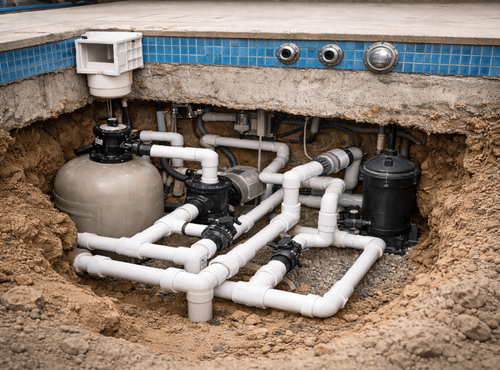
Water expands when it freezes, and if any water remains in your pool pipes during winter, it can exert tremendous pressure on the plumbing system. PVC lines, which are commonly used for pool plumbing, are strong but rigid. Excessive pressure from frozen water can cause cracking or splits, especially in older pipes or those with previous wear. Even minor shifts in soil during the freeze and thaw cycle can create stress points in the plumbing.
Northwest Arkansas experiences fluctuating winter temperatures, often dropping below freezing at night and warming during the day. These cycles cause the ground to freeze, thaw, and refreeze. Clay-heavy soil in the region is especially prone to expansion and contraction, which can move the soil around your pool plumbing. Warning Signs of Underground Pool Plumbing Shifts After a Freeze in Northwest Arkansas
Freezing temperatures in Northwest Arkansas can do more than just chill your water. They can also impact your underground pool plumbing, creating shifts or damage that may not be immediately visible. Many pool owners focus on ice or snow damage on the surface, but the pipes beneath your pool are just as vulnerable. Water expands when it freezes, and soil moves as it freezes and thaws. These movements place stress on buried plumbing lines, sometimes leading to leaks, pressure problems, or structural concerns. Understanding the warning signs of underground plumbing shifts is essential for protecting your pool and avoiding costly repairs.
After a winter freeze, the effects on your pool’s underground plumbing may not be obvious. Small changes in soil, hidden leaks, and reduced water pressure can quietly cause long-term problems. Homeowners and property managers who inspect their pools carefully and recognize early warning signs can prevent larger issues. In this article, we will cover how freeze and thaw cycles affect underground pool plumbing, the signs to watch for, preventive measures, and when to call a professional in Northwest Arkansas.
How Freezing Temperatures Affect Underground Pool Plumbing
Water expands when it freezes, and if any water remains in your pool pipes during winter, it can exert tremendous pressure on the plumbing system. PVC lines, which are commonly used for pool plumbing, are strong but rigid. Excessive pressure from frozen water can cause cracking or splits, especially in older pipes or those with previous wear. Even minor shifts in soil during the freeze and thaw cycle can create stress points in the plumbing.
Northwest Arkansas experiences fluctuating winter temperatures, often dropping below freezing at night and warming during the day. These cycles cause the ground to freeze, thaw, and refreeze. Clay-heavy soil in the region is especially prone to expansion and contraction, which can move the soil around your pool plumbing. Fiberglass, concrete, or vinyl pools all rely on stable underground pipes. If the soil shifts or settles unevenly, the pipes may bend, stress joints, or disconnect, leading to leaks or system inefficiency.
Why Plumbing Shifts Happen After a Freeze
There are several reasons underground pool plumbing may shift after a freeze:
Soil Movement: Frozen soil expands and pushes against buried pipes. As it thaws, the soil settles again. This constant movement can loosen joints or displace pipes.
Water Left Inside Pipes: If winterization is incomplete or water remains in suction or return lines, freezing water can crack the pipe internally.
Hydrostatic Pressure Changes: After snow melts or heavy rain follows a freeze, groundwater levels rise. This additional pressure around the pool shell can push pipes out of alignment or cause stress cracks.
Tree Roots and Shifting Ground: Moisture from melting snow or rain can encourage nearby tree roots to grow toward plumbing lines. Roots can exert pressure and exacerbate soil movement, leading to pipe misalignment.
Understanding these causes helps pool owners identify when plumbing issues might arise and why proactive measures are necessary.
Early Warning Signs of Underground Pool Plumbing Problems
Underground plumbing issues do not always show dramatic symptoms at first. Small warning signs can indicate a problem before major damage occurs.
Visible Water Level Drop: If your pool is losing water faster than normal evaporation, it may indicate a leak in underground plumbing. Performing a simple bucket test can help confirm if water loss exceeds natural evaporation rates.
Air Bubbles in Return Jets: Small, continuous air bubbles coming from return jets may indicate suction side leaks in underground pipes.
Reduced Water Pressure: A noticeable decrease in water flow or weak return jets can suggest a partially obstructed or damaged line.
Wet Spots in the Yard: Soft or muddy areas near the pool or equipment pad may indicate leaks in buried pipes.
Cracks in Decking Near Plumbing Routes: Soil shifting beneath concrete or paver decks can stress plumbing lines, sometimes causing hairline cracks near pipe runs.
Increased Chemical Demand: A leaking line allows fresh water into the system, diluting chemicals. Constantly needing to rebalance water chemistry can be a subtle warning of plumbing shifts.
Noticing these early signs allows homeowners and property managers to act before serious damage occurs.
Signs That Indicate a Serious Plumbing Shift
Some plumbing issues may require immediate attention:
• Pump Losing Prime Completely: If the pump struggles to maintain suction, it may indicate a significant shift or break in underground plumbing.
• Equipment Running Louder Than Normal: Cavitation or air in the lines can damage the pump if not addressed promptly.
• Mud or Debris in Pool Water: Material entering the pool may indicate a line breach allowing soil or groundwater to infiltrate.
• Pool Surface Lifting or Sinking Slightly: Movement of the pool shell can result from water eroding soil due to plumbing leaks.
• Water Pooling Around Equipment Pad: Standing water near the pump or heater may indicate a broken return line or leakage from buried pipes.
Recognizing these signs quickly helps prevent expensive repairs and protects your pool’s long-term functionality.
How to Confirm If Plumbing Has Shifted
Professional evaluation is essential for accurate diagnosis. DIY digging or guesswork can make the problem worse.
Pressure Testing: A professional uses pressure testing to isolate leaks and determine if underground plumbing has shifted or cracked.
Leak Detection Methods: Techniques include acoustic listening devices, dye testing, and line isolation. Professionals can detect leaks without unnecessary excavation.
Camera Inspection: In severe cases, a small camera is inserted into the line to visually inspect the condition of underground plumbing.
Timely inspections after a freeze provide confidence that your plumbing system is intact or alert you to repairs before minor shifts become major failures.
What Happens If You Ignore Plumbing Shifts
Ignoring underground plumbing problems can have cascading consequences:
• Soil Erosion Under Pool Shell: Leaks undermine soil, potentially compromising the structural support of the pool.
• Deck Damage: Shifting soil can crack concrete slabs or sink pavers near plumbing routes.
• Higher Water Bills: Continuous leakage increases costs without obvious explanation.
• Equipment Strain: Pumps and heaters must work harder to compensate for loss or air in the system, risking premature failure.
• More Expensive Repairs Later: Small leaks or minor shifts can evolve into major pipe failures requiring excavation and replacement.
Early detection saves money, protects equipment, and ensures the safety and integrity of your pool.
Preventing Underground Plumbing Problems After a Freeze
Prevention is key to avoiding winter damage:
• Proper Winterization: Fully drain suction and return lines, add approved antifreeze if needed, and seal drain plugs securely.
• Maintain Correct Water Level: A balanced water level reduces pressure on plumbing lines.
• Monitor Pool After Rain and Thaw Cycles: Check water level, jets, and pool surface for early signs of leaks.
• Schedule Post-Winter Inspections: Professionals can detect subtle shifts before they worsen.
• Keep Drainage Clear Around Pool: Proper grading and functioning drains prevent water from accumulating near buried plumbing.
Taking these preventive measures reduces risk and extends the life of your plumbing system.
When to Call a Professional in Northwest Arkansas
Call a professional immediately if you notice:
• Water loss exceeding normal evaporation
• Pump priming problems
• Wet or soft soil areas around pool or equipment pad
• Visible movement in the pool shell or deck
Local expertise is important. Professionals familiar with Northwest Arkansas understand soil composition, freeze patterns, and typical pool construction. Their experience ensures proper evaluation, diagnosis, and repair without unnecessary disruption to your property.
Conclusion and Call to Action
Freeze and thaw cycles in Northwest Arkansas can silently damage underground pool plumbing. Small soil movements, hidden leaks, or minor shifts in buried pipes can escalate if left unchecked. Early detection, monitoring, and professional inspection protect your pool, reduce repair costs, and maintain the safety and functionality of your system. Soils that undergo freezing and thawing can develop frost heave and movement that increases pressure on buried structures and utilities, especially when water is present. Fiberglass, concrete, or vinyl pools all rely on stable underground pipes. If the soil shifts or settles unevenly, the pipes may bend, stress joints, or disconnect, leading to leaks or system inefficiency.
Why Plumbing Shifts Happen After a Freeze
There are several reasons underground pool plumbing may shift after a freeze:
Soil Movement: Frozen soil expands and pushes against buried pipes. As it thaws, the soil settles again. This constant movement can loosen joints or displace pipes.
Water Left Inside Pipes: If winterization is incomplete or water remains in suction or return lines, freezing water can crack the pipe internally.
Hydrostatic Pressure Changes: After snow melts or heavy rain follows a freeze, groundwater levels rise. This additional pressure around the pool shell can push pipes out of alignment or cause stress cracks.
Tree Roots and Shifting Ground: Moisture from melting snow or rain can encourage nearby tree roots to grow toward plumbing lines. Roots can exert pressure and exacerbate soil movement, leading to pipe misalignment.
Understanding these causes helps pool owners identify when plumbing issues might arise and why proactive measures are necessary.
Early Warning Signs of Underground Pool Plumbing Problems
Underground plumbing issues do not always show dramatic symptoms at first. Small warning signs can indicate a problem before major damage occurs.
Visible Water Level Drop: If your pool is losing water faster than normal evaporation, it may indicate a leak in underground plumbing. Performing a simple bucket test can help confirm if water loss exceeds natural evaporation rates.
Air Bubbles in Return Jets: Small, continuous air bubbles coming from return jets may indicate suction side leaks in underground pipes.
Reduced Water Pressure: A noticeable decrease in water flow or weak return jets can suggest a partially obstructed or damaged line.
Wet Spots in the Yard: Soft or muddy areas near the pool or equipment pad may indicate leaks in buried pipes.
Cracks in Decking Near Plumbing Routes: Soil shifting beneath concrete or paver decks can stress plumbing lines, sometimes causing hairline cracks near pipe runs.
Increased Chemical Demand: A leaking line allows fresh water into the system, diluting chemicals. Constantly needing to rebalance water chemistry can be a subtle warning of plumbing shifts.
Noticing these early signs allows homeowners and property managers to act before serious damage occurs.
Signs That Indicate a Serious Plumbing Shift
Some plumbing issues may require immediate attention:
• Pump Losing Prime Completely: If the pump struggles to maintain suction, it may indicate a significant shift or break in underground plumbing.
• Equipment Running Louder Than Normal: Cavitation or air in the lines can damage the pump if not addressed promptly.
• Mud or Debris in Pool Water: Material entering the pool may indicate a line breach allowing soil or groundwater to infiltrate.
• Pool Surface Lifting or Sinking Slightly: Movement of the pool shell can result from water eroding soil due to plumbing leaks.
• Water Pooling Around Equipment Pad: Standing water near the pump or heater may indicate a broken return line or leakage from buried pipes.
Recognizing these signs quickly helps prevent expensive repairs and protects your pool’s long-term functionality.
How to Confirm If Plumbing Has Shifted
Professional evaluation is essential for accurate diagnosis. DIY digging or guesswork can make the problem worse.
Pressure Testing: A professional uses pressure testing to isolate leaks and determine if underground plumbing has shifted or cracked.
Leak Detection Methods: Techniques include acoustic listening devices, dye testing, and line isolation. Professionals can detect leaks without unnecessary excavation.
Camera Inspection: In severe cases, a small camera is inserted into the line to visually inspect the condition of underground plumbing.
Timely inspections after a freeze provide confidence that your plumbing system is intact or alert you to repairs before minor shifts become major failures.
What Happens If You Ignore Plumbing Shifts
Ignoring underground plumbing problems can have cascading consequences:
• Soil Erosion Under Pool Shell: Leaks undermine soil, potentially compromising the structural support of the pool.
• Deck Damage: Shifting soil can crack concrete slabs or sink pavers near plumbing routes.
• Higher Water Bills: Continuous leakage increases costs without obvious explanation.
• Equipment Strain: Pumps and heaters must work harder to compensate for loss or air in the system, risking premature failure.
• More Expensive Repairs Later: Small leaks or minor shifts can evolve into major pipe failures requiring excavation and replacement.
Early detection saves money, protects equipment, and ensures the safety and integrity of your pool.
Preventing Underground Plumbing Problems After a Freeze
Prevention is key to avoiding winter damage:
• Proper Winterization: Fully drain suction and return lines, add approved antifreeze if needed, and seal drain plugs securely.
• Maintain Correct Water Level: A balanced water level reduces pressure on plumbing lines.
• Monitor Pool After Rain and Thaw Cycles: Check water level, jets, and pool surface for early signs of leaks.
• Schedule Post-Winter Inspections: Professionals can detect subtle shifts before they worsen.
• Keep Drainage Clear Around Pool: Proper grading and functioning drains prevent water from accumulating near buried plumbing.
Taking these preventive measures reduces risk and extends the life of your plumbing system.
When to Call a Professional in Northwest Arkansas
Call a professional immediately if you notice:
• Water loss exceeding normal evaporation
• Pump priming problems
• Wet or soft soil areas around pool or equipment pad
• Visible movement in the pool shell or deck
Local expertise is important. Professionals familiar with Northwest Arkansas understand soil composition, freeze patterns, and typical pool construction. Their experience ensures proper evaluation, diagnosis, and repair without unnecessary disruption to your property.
Conclusion and Call to Action
Freeze and thaw cycles in Northwest Arkansas can silently damage underground pool plumbing. Small soil movements, hidden leaks, or minor shifts in buried pipes can escalate if left unchecked. Early detection, monitoring, and professional inspection protect your pool, reduce repair costs, and maintain the safety and functionality of your system.
BC Pools specializes in assessing, repairing, and maintaining underground pool plumbing throughout Northwest Arkansas. Our team understands local winter conditions, soil behavior, and common plumbing risks after a freeze. We provide inspections, leak detection, and repairs that prevent minor issues from becoming major problems.
Contact BC Pools today to schedule a professional inspection of your underground pool plumbing. Protect your investment, prevent structural damage, and ensure your pool is ready for every season.