
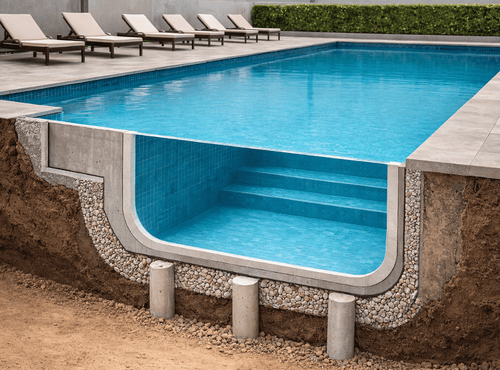
Winter in Northwest Arkansas is not just a test of your pool’s surface or equipment. It can also reveal hidden issues with older pools that affect pool structural stability. Aging materials, shifting soil, and freeze-thaw cycles all combine to stress pool walls, decks, and plumbing. Homeowners often underestimate the impact winter weather can have, especially on pools that are ten or more years old. Evaluating older pools before and during winter is critical to prevent damage and costly repairs. By understanding what to look for, property owners can protect their investment and maintain a safe, stable pool all year.
Older pools face unique challenges that newer pools are designed to handle more easily. Over time, concrete, gunite, fiberglass, or vinyl pools naturally experience wear and tear. Seasonal changes in temperature and moisture can worsen these issues. Even small cracks or shifting soil during winter can affect long-term structural integrity. In this article, we will explore the key considerations for evaluating older pools in Northwest Arkansas, signs of structural stress to watch for, preventive measures, and when to call a professional for inspection and repair.
Why Winter Is a Critical Time for Older Pools
Northwest Arkansas winters are unpredictable. Nights often drop below freezing, while daytime temperatures can warm quickly. This freeze-thaw cycle affects the soil around pools, especially clay-heavy soil common in the region. According to the U.S. Department of Agriculture’s Natural Resources Conservation Service (NRCS), shrinking and swelling of expansive soils, common in clay-rich areas, can result in serious cracking and damage to structures. Soil expands as it freezes and contracts when it thaws. For older pools with rigid materials, this movement can create stress on pool walls, plumbing, and surrounding decks.
Heavy rainfall during winter adds another challenge. Saturated soil increases pressure on pool shells and can erode backfill beneath decking or coping. Older pools, which may already have minor structural weaknesses, are more vulnerable to these effects. Ignoring these conditions can lead to cracks, shifting decks, plumbing issues, and even premature pool failure over time.
How Aging Affects Different Pool Types
Concrete and Gunite Pools
Concrete and gunite pools are sturdy, but age and wear can make them more susceptible to winter stress. Over time, plaster surfaces can develop micro-cracks. Tile lines and coping may loosen slightly as soil shifts beneath the pool. Rigid gunite walls do not flex, so uneven pressure from expanding soil or saturated ground can lead to visible cracks or structural stress points.
Fiberglass Pools
Fiberglass pools are flexible and resistant to minor shifts, but long-term use can weaken certain areas. Older shells may develop surface stress marks, gelcoat crazing, or slight distortions. Because fiberglass pools are lighter than concrete pools, they are more sensitive to rising groundwater caused by heavy winter rain. Proper evaluation ensures the shell remains stable and supported.
Vinyl Liner Pools
Vinyl liner pools rely on panels and a flexible liner. Over time, the base may settle or shift, causing wrinkles or tension in the liner. Soil movement or erosion beneath the pool can put stress on panels and the liner, particularly near plumbing connections. Older vinyl pools require careful inspection to ensure liners remain properly seated and walls are supported.
Key Factors to Consider for Structural Stability
Evaluating older pools requires looking beyond the surface. Consider these factors:
• Age of the Pool: Older pools naturally have more wear and tear and may not have modern construction reinforcements.
• Soil Type and Drainage: Clay soils are common in Northwest Arkansas and expand during winter, placing pressure on pool structures. Proper drainage can relieve stress.
• Pool Depth and Shape: Deeper or uniquely shaped pools may experience more localized stress on walls or floors.
• History of Repairs or Resurfacing: Prior repairs can indicate previous structural issues and areas prone to weakness.
• Equipment and Plumbing Age: Older plumbing, pumps, and filters can affect water distribution and pressure, influencing overall structural stability.
Warning Signs of Structural Stress in Older Pools
Homeowners should know the signs that indicate winter stress may be affecting an older pool:
• Cracks in Plaster, Gunite, or Concrete: Hairline cracks may expand during freeze-thaw cycles.
• Bulging Walls or Uneven Pool Surface: Visible distortions often indicate soil pressure or structural fatigue.
• Shifting Coping or Tile Lines: Loose or separated tiles show movement in the surrounding structure.
• Deck Cracks or Settling: Cracks in concrete or pavers around the pool may reflect soil movement or erosion.
• Unexplained Water Loss: Significant water loss can indicate leaks in plumbing or stress-related cracks.
• Equipment Strain: Pumps or heaters working harder than normal may signal pressure changes or plumbing misalignment.
Recognizing these signs early allows property owners to act before damage worsens.
Plumbing Considerations for Older Pools
Underground plumbing in older pools is especially vulnerable during winter. Pipes may be made from older PVC or metal materials that do not flex easily. Freeze-thaw cycles can shift or stress these lines, leading to leaks or blockages. Return and suction lines, main drains, and skimmer connections should be evaluated for alignment and integrity. Reduced water flow, air bubbles in jets, or difficulty maintaining pump prime can all signal potential plumbing issues that affect structural stability.
Deck and Surrounding Area Inspection
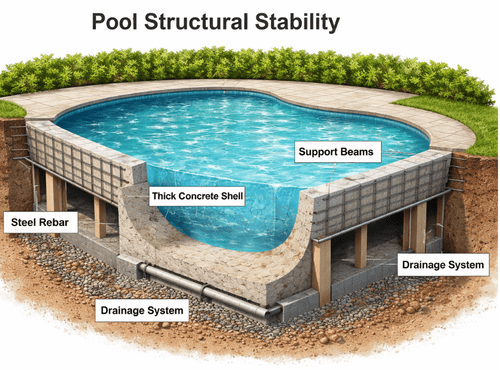
A pool is more than just the shell. Decks and surrounding areas play a key role in maintaining stability:
• Deck Settling or Uneven Surfaces: Shifting soil beneath concrete slabs or pavers can destabilize the pool perimeter.
• Paver or Concrete Cracks: Visible cracks may indicate soil movement or pressure from aging materials.
• Soil Erosion: Water runoff or saturation can wash away backfill under decking.
• Drainage: Ensure proper grading and functional drains to prevent water accumulation near the pool and deck.
Maintaining these areas helps preserve structural integrity and prevents minor issues from becoming major problems.
Assessing Winter Readiness for Older Pools
Preparing an older pool for winter protects structural stability:
• Check Water Chemistry and Levels: Balanced water reduces stress on plaster or liners.
• Winterize Plumbing Lines Properly: Drain suction and return lines and seal drain plugs.
• Cover the Pool: Protects surfaces and helps maintain water temperature.
• Inspect Drainage Systems and Downspouts: Prevents water from pooling around the pool perimeter.
• Remove Debris: Fallen leaves, branches, or dirt can block drains and contribute to water accumulation.
These steps reduce stress on older pools during freeze-thaw cycles and heavy winter rainfall.
Preventive Maintenance Strategies
Proactive maintenance can extend the life of an older pool:
• Professional Structural Inspections: Identify hairline cracks, coping issues, and soil movement early.
• Repair Minor Cracks: Address issues before they worsen.
• Maintain Proper Chemical Balance: Protects surfaces and prevents further deterioration.
• Ensure Plumbing Lines Are Protected: Winterization prevents freeze damage.
• Install or Improve Drainage Systems: Reduces hydrostatic pressure and soil saturation.
Preventive strategies reduce repair costs, protect investment, and keep pools safe during winter.
Long-Term Benefits of Evaluating Older Pools
Taking the time to evaluate older pools before and during winter has lasting benefits:
• Protects Investment and Property Value: Avoids costly emergency repairs.
• Reduces Repair Costs: Early detection prevents major damage.
• Extends Pool Lifespan: Maintains structural integrity and material quality.
• Prevents Structural and Plumbing Failures: Reduces risk of leaks, cracks, or equipment damage.
• Peace of Mind: Homeowners can enjoy their pool knowing it is structurally sound.
Evaluating older pools is not just about avoiding winter problems. It ensures safe, reliable operation year after year.
When to Call a Professional in Northwest Arkansas
Professional evaluation is necessary when:
• Cracks, bulging walls, or tile separation appear
• Pool water loss exceeds normal evaporation
• Equipment shows signs of strain after freeze or thaw
• Deck or surrounding soil shows settling or erosion
• Any visible signs of plumbing stress
Local experts in Northwest Arkansas understand the soil composition, winter weather, and construction methods unique to the region. Their inspections detect hidden problems that could compromise structural stability if left unaddressed.
Conclusion and Call to Action
Older pools face unique winter challenges that can affect pool structural stability. Freeze-thaw cycles, heavy rainfall, and aging materials all increase the risk of cracks, plumbing issues, and deck movement. Evaluating your pool before and during winter helps prevent long-term damage, extends its lifespan, and protects your investment.
BC Pools has extensive experience inspecting and maintaining older pools throughout Northwest Arkansas. Our team understands local winter conditions, soil behavior, and structural risks. We provide detailed inspections, preventive maintenance, and repairs that ensure your pool remains safe and stable all year.
Contact BC Pools today to schedule a winter structural evaluation for your pool. Early detection and professional care keep your older pool in top condition and protect your investment for seasons to come.