
Maintaining proper pool drainage is essential for homeowners in Northwest Arkansas, especially during the rainy winter months. Heavy winter rains combined with occasional freezing temperatures can create challenging conditions for any pool area. Water that does not flow away from the pool properly can lead to erosion, damage to decks and coping, stress on underground plumbing, and even harm to pool equipment. Addressing drainage problems early ensures your pool area remains safe, stable, and ready for spring use.
Winter in Northwest Arkansas can vary widely from year to year. Some seasons bring long periods of rain, while others include freezing nights followed by warmer days, causing the soil to expand and contract repeatedly. The region’s clay-rich soil absorbs water quickly, swells when wet, and shrinks as it dries. These shifts can stress pool decks, pavers, and surrounding landscaping. Homeowners who inspect and maintain their pool drainage during these months prevent minor issues from becoming costly repairs.
Why Pool Drainage Is Critical During Winter
Proper pool drainage is critical to prevent water from pooling near the pool deck and foundation. Water that collects near your pool can seep under concrete, erode the soil, and put pressure on underground plumbing. Over time, this can lead to cracks in your deck, uneven pavers, or even damage to your pool structure.
In Northwest Arkansas, winter rainfall averages several inches per month, often in short, heavy bursts. For example, historical data from the National Weather Service shows that Fayetteville can receive anywhere from 2.8 inches to over 15.5 inches of rainfall during the winter months (December–February), depending on the year. Combined with freezing nights, the soil undergoes freeze-thaw cycles that push upward on decks and pavers. Without proper drainage, these cycles can cause concrete cracking, tilting of pavers, or separation in coping. Pools with inadequate drainage are also more prone to water pooling near equipment, which can lead to corrosion or electrical issues in pumps, heaters, and filters. Maintaining proper drainage is not only about preventing visible damage, but it also protects your investment in your pool and equipment.
Common Drainage Problems in Northwest Arkansas Pools
Even well-built pools can face drainage challenges during the winter months. Understanding the most common issues helps homeowners take preventive action.
- Improper grading around the pool: If your yard slopes toward the pool instead of away, water will collect near the deck. Over time, this can saturate soil, cause erosion, and stress pool decks. Homeowners can often spot this by observing water after a heavy rain, puddles near the deck, or uneven runoff, which indicate grading issues.
- Clogged gutters and downspouts: Leaves, pine needles, and debris can block gutters and drains. Overflow from clogged gutters often runs toward the pool deck, increasing soil saturation and creating erosion. Checking gutters regularly, especially in late fall and early winter, helps prevent this problem.
- Shifting or settling soil: Freeze-thaw cycles in clay-heavy soil can cause the ground to expand and contract. This movement can shift pavers or create soft spots around the pool deck. Soft soil or uneven areas near the pool may indicate soil settling, which can lead to cracks or instability.
- Drainage channel or catch basin failures: Drainage channels and catch basins are designed to redirect water away from the pool. Heavy winter rains can clog these systems or cause cracks, leaks, or misalignment. Inspecting drains before and during the winter ensures that water flows properly and prevents damage to your pool area.
- Underground plumbing leaks: Excess water in the soil can reveal weak points in underground pipes. Leaks are often difficult to detect but can lead to erosion under the pool deck or near the equipment pad. Early detection, such as noticing unusually wet areas near your pool, is key to preventing major damage.
Signs Your Pool Drainage Needs Attention
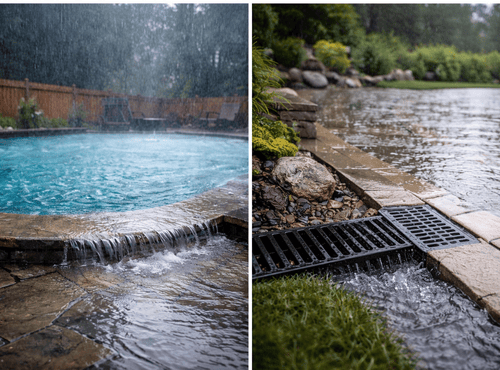
Identifying drainage issues early saves both time and money. Homeowners should look for the following warning signs during winter inspections:
- Pooling water near the deck, coping, or landscaping. Even small puddles that remain for several hours can indicate poor drainage.
- Cracks in concrete or pavers are caused by soil movement from wet conditions or freeze-thaw cycles. Watch for widening cracks or new ones forming over the winter.
- Soft or uneven soil around the pool. This can be a sign that the soil is saturated and may collapse or shift further.
- Blocked drains in catch basins or downspouts that cause overflow or backflow near the pool area.
- Equipment issues such as pumps, heaters, or filters being exposed to excess water, which can lead to rust, leaks, or electrical problems.
Conducting a thorough winter inspection allows homeowners to address problems before they escalate. Taking notes or photos during inspections can help track changes over time and guide repairs or improvements.
How to Maintain Proper Pool Drainage During Rainy Winter Months
Maintaining proper drainage does not have to be difficult. Homeowners in Northwest Arkansas can follow these practical steps:
- Clear debris from drains, gutters, and catch basins: Leaves, pine needles, and dirt can block water flow. Cleaning these regularly ensures water moves away from the pool as intended.
- Check and improve grading around the pool: Water should naturally flow away from the deck. If you notice low spots where water collects, adding soil, sand, or gravel can help improve the slope and prevent pooling.
- Inspect and repair drains and downspouts: Look for loose connections, cracks, or clogs. Ensure downspouts direct water away from the pool area. Proper functioning drains are essential to avoid water accumulation near decks and equipment.
- Stabilize soft or eroded soil: Use gravel, sand, or landscape fabric in vulnerable areas to prevent erosion. Firm soil reduces shifting and protects pavers and decks from movement.
- Monitor water flow after heavy rain: Walk around your pool to observe drainage patterns. Note any areas where water pools or drains slowly. Making adjustments now can prevent bigger problems in spring.
- Check deck and coping for damage: Look for small cracks or separation that can allow water infiltration. Seal minor cracks or schedule repairs if larger cracks appear.
- Maintain equipment areas: Ensure pumps, filters, and heaters are elevated or protected from standing water. This prevents water damage and prolongs the life of your pool equipment.
Regular winter maintenance reduces the risk of serious issues, protects your pool investment, and ensures your pool area remains safe and enjoyable.
When to Call a Professional Pool Builder
Some drainage problems are too complex for DIY fixes. You should consider contacting a pool builder if you notice:
- Large areas of pooling water that do not drain naturally
- Cracks are spreading across the deck or coping
- Shifting soil is affecting the pool structure
- Damaged or blocked drainage systems
- Signs of leaks in underground plumbing
A professional can evaluate drainage issues accurately, recommend solutions, and perform repairs that last. Working with an experienced pool builder ensures that your drainage system is properly installed and maintained, reducing long-term costs and preventing damage.
Preventive Tips for Future Winters
Prevention is always easier than repair. Consider these strategies:
- Schedule annual winter inspections: Check slopes, drains, and gutters before the heaviest rainfall begins.
- Keep gutters and downspouts clear: Regular cleaning prevents water overflow near your pool.
- Seal concrete surfaces: Sealing reduces water infiltration and prevents cracks from forming.
- Plan drainage improvements in advance: Address weak spots before the next rainy season.
- Use landscaping to manage water: Grass or shrubs can absorb excess water and help stabilize soil.
- Install additional drainage solutions if needed: French drains, catch basins, or dry wells can improve water flow away from your pool area.
By following these preventive measures, homeowners protect their pools, decks, and landscaping for years to come.
Conclusion
Proper pool drainage is essential for protecting your pool, deck, and surrounding areas, especially during the rainy winter months in Northwest Arkansas. Regular inspections, slope maintenance, debris removal, and early problem-solving can prevent erosion, water damage, and costly repairs.
For professional assistance, BC Pools, your trusted pool builder in Northwest Arkansas, can evaluate your pool drainage and provide expert solutions. Contact us today to ensure your pool area remains safe, stable, and ready for spring enjoyment.