
Winter is the best season to resurface your pool in Northwest Arkansas. Cooler temperatures, lower humidity, and reduced pool use create the perfect environment for achieving a durable, long-lasting surface. Resurfacing in winter ensures your pool is protected from damage, looks great, and is ready for spring without delays or unexpected problems. Understanding why winter works and how to prepare your pool can save time, money, and frustration.
Pools in NWA come in many types: gunite, fiberglass, plaster, and pebble finishes, and each responds differently to resurfacing. Winter conditions help all these surfaces cure correctly, minimize cracking, and allow professional contractors to work efficiently. Taking the time to resurface your pool in the off-season is a smart investment in its longevity and performance.
Understanding Pool Surfaces and Winter Resurfacing
Gunite Pools
Gunite pools are built on-site using a mixture of concrete and sand sprayed over a steel rebar framework. This creates a strong, rigid structure that is highly customizable. Most gunite pools are finished with plaster, pebble, or tile, which may wear over time or develop cracks.
Winter resurfacing is ideal for gunite pools because cooler, drier conditions allow plaster and other finishes to cure evenly. Rapid curing in summer heat can lead to cracks, flaking, or uneven surfaces. Winter also makes it easier to inspect and repair minor damage before it worsens, especially after freeze-thaw cycles common in NWA.
Fiberglass Pools
Fiberglass pools are prefabricated shells made of fiberglass reinforced plastic. They have a smooth gelcoat surface that rarely needs resurfacing but may require refinishing for scratches, minor cracks, or discoloration. Winter is perfect for these repairs because the pool is typically empty, making preparation and refinishing simpler. Fiberglass can handle temperature changes well, but winter resurfacing ensures adhesives, coatings, or touch-ups cure properly for a long-lasting finish.
Plaster or Pebble Finishes
Plaster and pebble finishes are common in gunite pools. These surfaces are durable but can degrade over time due to chemical exposure, weather, or heavy use. Winter resurfacing allows for proper curing of plaster or pebble coatings, ensuring adhesion and smoothness. Lower temperatures and reduced sunlight minimize the risk of rapid drying or surface imperfections that can occur in warmer months.
Why Winter Works Best for Resurfacing
Cooler Temperatures
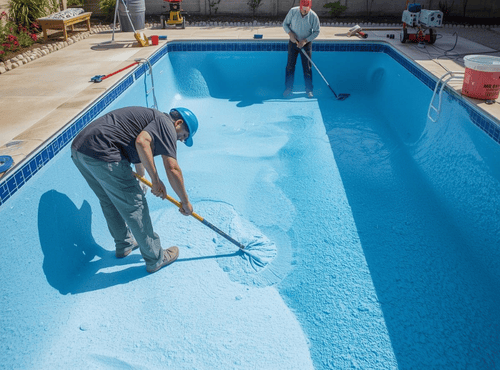
Winter temperatures in NWA provide a consistent, moderate range for resurfacing materials to cure. Plaster, concrete, and other materials set more evenly in cooler conditions, reducing the risk of cracks or weak spots. In contrast, summer heat can cause rapid drying, leading to stress and surface damage.
Lower Humidity
Humidity affects the curing process. Lower winter humidity prevents moisture-related problems like delayed drying or uneven surface formation. This helps ensure that plaster, pebble, or gelcoat finishes adhere properly to the pool shell.
Empty or Partially Drained Pools
Most pools in NWA are not in use during winter. This allows contractors to drain or partially drain pools safely, making preparation and resurfacing easier. Empty pools also reduce the risk of accidents or interference with swimming.
Cleaner Surfaces
Cooler winter temperatures reduce algae growth and minimize contaminants in pool water. A cleaner surface ensures better adhesion for resurfacing materials, which is essential for long-lasting results.
Easier Scheduling
Contractors typically have more availability in the winter off-season. Scheduling your pool resurfacing project during this time ensures professionals can devote more attention and complete the work efficiently.
Ready for Spring
Winter resurfacing allows your pool to be fully finished and ready for use when warmer weather arrives. This eliminates the need for last-minute repairs or rushed projects in the spring.
Step-by-Step Winter Resurfacing Process
1. Surface Inspection
Before resurfacing, the pool is inspected for cracks, chips, or worn finishes. Proper inspection identifies areas that need repair and ensures the resurfacing project addresses all potential problems.
2. Draining and Preparation
Pools are drained partially or completely, depending on the type of resurfacing. Winter conditions make it easier to safely manage water levels and prevent damage to pool walls or plumbing.
3. Surface Cleaning
The pool surface is cleaned to remove algae, debris, old plaster, or deteriorating finishes. Clean surfaces allow materials to bond properly and provide a smooth finish.
4. Application of Resurfacing Materials
Resurfacing materials, such as plaster, pebble, quartz, or gelcoat, are applied according to pool type. Winter conditions help these materials cure slowly and evenly, producing a strong, long-lasting surface.
5. Curing and Monitoring
After resurfacing, materials need time to set. Winter temperatures provide a stable environment for curing. Contractors monitor the surface to ensure proper adhesion and durability, and homeowners are advised to avoid filling the pool too quickly or using it prematurely.
Common Mistakes to Avoid
- Attempting DIY resurfacing without proper equipment or expertise.
- Ignoring the winter temperature ranges needed for curing.
- Skipping inspections of cracks, chips, or plumbing.
- Not using professional-grade materials for long-term durability.
Avoiding these mistakes ensures a smooth, safe, and lasting resurfaced pool.
Expert Tips from BC Pools
- Schedule inspections and resurfacing early in winter to avoid extreme cold.
- Monitor temperatures to guarantee proper curing and finish quality.
- Use materials designed for durability, safety, and NWA weather conditions.
- Follow professional guidance for fiberglass, gunite, and plaster pools.
- Protect plumbing, pumps, and equipment during resurfacing to prevent freeze damage.
Cost and Planning Considerations
Winter resurfacing can save money in several ways. Off-season scheduling avoids higher summer rates, prevents delays, and reduces the risk of damage that could lead to costly repairs later. Homeowners can plan, ensuring pools are ready for spring without the rush or inconvenience of summer projects. Resurfacing in winter also maximizes the life of your pool surface, delaying the need for additional maintenance or repairs.
Local Winter Considerations in Northwest Arkansas
NWA winters can drop below 20°F on cold nights, with occasional snow or freeze-thaw cycles. According to the National Weather Service, freezing temperatures commonly occur across Arkansas beginning in late October and can persist into spring in many areas of the state. These recurring freeze-thaw cycles can damage outdoor surfaces and pool structures. Proper drainage, pool covers, and temperature monitoring are essential. Resurfacing in winter helps ensure your pool surface cures properly without being affected by the rapid temperature swings common in this region.
Conclusion and Call-to-Action
Winter is the most effective time for pool resurfacing in Northwest Arkansas. Cooler temperatures, lower humidity, cleaner surfaces, and empty pools allow resurfacing materials to cure evenly and produce long-lasting results. Winter projects are easier to schedule, reduce the risk of damage, and ensure your pool is ready for spring use.
BC Pools provides expert winter resurfacing services for gunite, fiberglass, and plaster pools in NWA. Protect your pool, extend its life, and enjoy a beautiful surface all year. Contact BC Pools today to schedule your winter resurfacing project and ensure your pool is ready for spring and summer fun.