
If you have a backyard pool, you may have noticed that your pool deck can develop bumps, cracks, or uneven spots during the colder months. This is often caused by pool deck heaving, a common problem that happens when the ground beneath the deck shifts or rises in winter. Understanding why this occurs can help you protect your pool area, prevent damage, and save money on costly repairs.
Winter weather can be tough on outdoor surfaces. Cold temperatures, moisture, and frost can all work together to cause the concrete or stone around your pool to lift or crack. Many homeowners do not realize how much the soil beneath the deck can affect its stability. By learning about the causes of pool deck heaving, you can take proactive steps to maintain your deck and keep it safe and attractive year after year.
What Is Pool Deck Heaving?
Pool deck heaving occurs when the surface of your pool deck moves upward or becomes uneven. This is not the same as normal settling, which happens gradually over time as the soil beneath a deck compacts. Heaving is often caused by freezing soil or water expanding under the deck.
Heaving can cause safety hazards, including uneven walking surfaces, tripping risks, and water pooling in areas where it should not. It can also damage the appearance of your deck, making cracks and bumps more noticeable. For pool owners, recognizing the difference between normal settling and heaving is important for timely repairs and maintenance.
How Winter Conditions Affect Pool Decks
One of the main causes of pool deck heaving is frost. When water in the soil freezes, it expands. This expansion pushes the soil upward, which in turn lifts the pool deck. Even small amounts of movement over time can create noticeable bumps, cracks, or uneven slabs.
The impact of freezing temperatures on outdoor surfaces is well documented. Research from the Federal Highway Administration shows that environmental factors such as moisture, freeze thaw cycles, and temperature changes account for about 36 percent of damage in flexible pavements and 24 percent in rigid pavements. These same conditions can also affect residential surfaces like pool decks because the soil beneath them reacts to freezing water in similar ways.
Freeze-thaw cycles make the problem worse. When temperatures rise slightly, the ice melts and the soil settles again. As temperatures drop once more, the cycle repeats. Over several weeks or months of winter weather, repeated freezing and thawing can gradually lift your pool deck and damage the surface.
Soil and Ground Conditions
The type of soil under your pool deck plays a major role in whether heaving occurs. Clay and silt soils hold more water and are more likely to expand when they freeze. Sandy soils drain more easily and are less likely to cause frost heave.
Soil compaction is another factor. If the soil under your deck was not properly compacted during installation, it may contain pockets of air or water. These pockets can freeze and expand during winter, increasing the risk of pool deck heaving. Proper base preparation, including replacing unstable soil with compacted sand or gravel, can reduce this risk.
Poor Drainage Can Make Heaving Worse
Water that collects under or around your pool deck increases the likelihood of heaving. Poor drainage can occur for several reasons. The ground may slope toward the pool, rainwater may pool in low spots, or drainage systems may be clogged or missing.
When water sits under the deck and freezes, it expands and lifts the surface. Homeowners often overlook small drainage problems, but these issues can lead to major damage over time. Ensuring water drains away from your pool deck is one of the simplest ways to reduce the risk of heaving.
Pool Deck Materials and Their Vulnerability
Different pool deck materials respond differently to freezing conditions. Concrete, pavers, and natural stone all expand and contract with temperature changes, but some materials are more susceptible to damage.
Concrete is durable but can crack if water seeps into joints or small pores. Pavers are flexible, but they can shift or become uneven if the soil beneath moves. Natural stone is strong but can develop cracks or gaps when frost pushes the ground upward. Understanding how your deck material reacts to winter conditions helps you plan proper maintenance and repairs.
Signs of Pool Deck Heaving
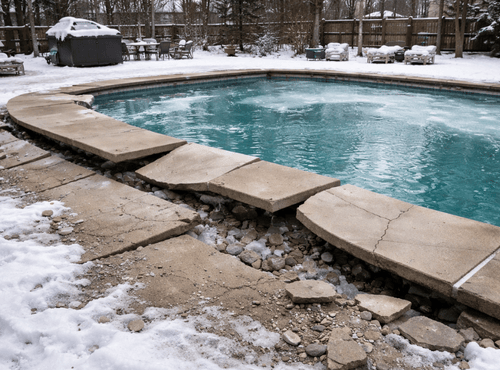
It is important to recognize early signs of pool deck heaving. Some common signs include:
- Uneven or bumpy surfaces around the pool
- Visible cracks in concrete, pavers, or stone
- Gaps forming between slabs or coping stones
- Water is pooling in areas that previously drained properly
- Shifting or leaning edges
Regular inspection of your pool deck, especially after cold weather, can help you catch heaving before it causes serious damage.
Preventive Measures for Homeowners
There are several steps homeowners can take to prevent pool deck heaving during winter:
- Improve Drainage: Ensure that water drains away from the pool deck. Consider grading the ground, adding surface drains, or installing French drains.
- Seal Cracks and Joints: Inspect your deck and seal any cracks or expansion joints where water could enter.
- Soil Preparation: For new decks, use well-compacted sand or gravel instead of clay-heavy soil.
- Insulation: In areas with severe winters, adding insulation under the deck can help reduce freezing of the soil.
- Regular Maintenance: Keep your deck clean, inspect it for cracks, and monitor for uneven surfaces throughout winter.
Even small preventative steps can make a big difference in preventing frost heave and maintaining the safety and appearance of your pool deck.
Repairing a Heaving Pool Deck
Some cases of pool deck heaving require professional repair. Minor bumps or cracks may be fixed with patching, but larger problems often need soil assessment, re-leveling, or replacing sections of the deck.
A professional can evaluate the soil, drainage, and deck stability to determine the best repair method. Attempting DIY repairs without understanding the root cause can make the problem worse. In many cases, proper drainage solutions and base adjustments are required to prevent future heaving.
Long-Term Effects of Ignoring Heaving
Ignoring pool deck heaving can lead to more serious issues. Over time, repeated freezing and lifting can cause structural damage to concrete slabs, pavers, or coping stones. Surrounding landscaping can also be affected, creating uneven ground and drainage problems.
Safety hazards are another concern. Uneven or cracked surfaces increase the risk of slips and falls around the pool. Addressing heaving early is the most cost-effective approach and helps maintain both the aesthetics and safety of your pool area.
Winter Pool Deck Maintenance Checklist
To reduce the risk of pool deck heaving, homeowners should follow a winter maintenance checklist:
- Inspect the deck for cracks, bumps, and uneven slabs
- Check that drainage systems are clear and water flows away from the deck
- Seal expansion joints and cracks to prevent water intrusion
- Remove standing water after rain or snow
- Monitor soil moisture levels and consider adding gravel or sand to problem areas
- Schedule a professional inspection if any signs of heaving are present
Following these steps ensures your pool deck remains safe and stable throughout the winter months.
Conclusion
Winter weather can be challenging for any backyard pool area. Pool deck heaving happens when freezing water in the soil pushes your deck upward, causing cracks, bumps, and uneven surfaces. Poor drainage, soil type, and deck materials all play a role in the problem.
By understanding the causes, inspecting your deck regularly, improving drainage, sealing cracks, and consulting professionals when needed, you can prevent damage and keep your pool deck safe and stable for years. For expert guidance and repairs, BC Pools, your trusted pool builder in Northwest Arkansas, can help ensure your pool area remains beautiful, functional, and ready for spring and summer enjoyment. Taking proactive steps now saves both time and money while protecting your investment.
Contact BC Pools today to schedule an inspection or repair and keep your pool deck safe, stable, and ready for use.