
Understanding Structural Cracks and Cosmetic Cracks is important for every homeowner, especially during cold weather. Cracks in concrete, pool decks, or pool shells are common when temperatures drop and the ground freezes. Knowing the difference between harmless and serious cracks can help you protect your pool and avoid costly repairs.
Many homeowners feel alarmed when they see cracks and are not sure whether they are dangerous. While some cracks are purely cosmetic and affect only the surface, others indicate deeper structural problems that require professional attention. Learning how to identify these cracks and when to call a professional can save both money and stress.
What Are Cosmetic Cracks
Cosmetic cracks are minor surface cracks that usually do not affect the structure of your pool or concrete. They often occur due to normal settling, temperature changes, or shrinkage as concrete dries.
Small and Shallow
Cosmetic cracks are thin hairline cracks that stay mostly on the surface. They do not compromise the strength of the pool or deck.
Straight and Isolated
These cracks usually appear in straight lines, affecting only small areas. They are uniform and predictable.
Common Locations
Cosmetic cracks can be found on pool decks, patios, walkways, or pool coping. In cold weather, they might be more visible because water in the cracks freezes, but they rarely get worse quickly.
Homeowners can often repair cosmetic cracks themselves using patching materials. Monitoring them over time ensures they do not develop into more serious issues.
What Are Structural Cracks
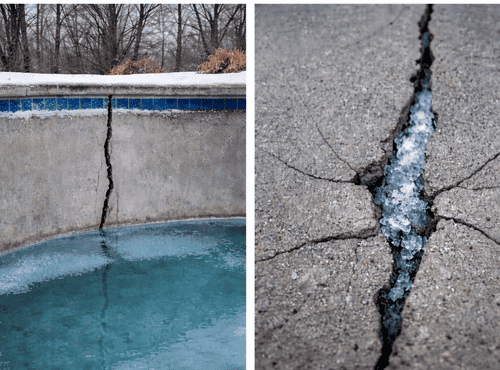
Structural cracks are deeper cracks that affect the stability of your pool or concrete structure. They happen when forces like soil movement, Hydrostatic Pressure, freeze-thaw cycles, or poor construction exceed the material’s strength.
Wide and Deep
Structural cracks are larger than cosmetic cracks and often go deep into the concrete or pool shell. They may continue to grow if not repaired.
Irregular and Diagonal
Unlike cosmetic cracks, structural cracks can be jagged or diagonal. They may appear in multiple areas, especially near load-bearing points.
Signs of Structural Stress
Structural cracks may come with other warning signs, such as uneven pool floors, bulging walls, sticking doors near the pool, or gaps forming between the pool and deck. These cracks need professional attention to avoid bigger problems.
How Cold Weather Affects Cracks
Cold weather can make cracks more noticeable and sometimes worse. Freeze-thaw cycles happen when water enters cracks, freezes, and expands. This expansion can widen cracks over time.
Frost heave is another factor. According to the U.S. Department of Agriculture Natural Resources Conservation Service, frost-susceptible soils can form ice lenses as moisture moves toward freezing areas in the ground. This process causes frost heave, which is the upward expansion of soil that can lift and damage concrete slabs, foundations, and other structures. When frozen soil expands and pushes against pools or decks, it can create cracks in concrete. When the soil thaws, it contracts, leaving gaps and uneven surfaces that may worsen structural stress over time.
How Soil Types Affect Cracks
The type of soil around your pool or concrete structure can make a big difference in how cracks form and develop.
Clay Soil
Clay-heavy soil retains water longer than other types. This means the ground around your pool can stay saturated for extended periods, increasing pressure on the structure. During freezing temperatures, clay expands and pushes against pool walls and decks, increasing the likelihood of structural cracks.
Sandy Soil
Sandy soil drains water more quickly and is less prone to expansion. Pools or concrete structures built on sandy soil are generally less affected by cold weather, although freeze-thaw cycles can still cause cracks.
Understanding your soil type helps homeowners anticipate potential problems and take preventive measures before cracks appear.
Pool-Specific Impacts
Cracks affect different types of pools in slightly different ways.
Inground Pools
Concrete and gunite inground pools are more prone to structural cracks because they rely on the surrounding soil for support. Poor drainage or high groundwater can cause the pool shell to shift or crack, especially during winter.
Fiberglass Pools
Fiberglass pools are less likely to crack structurally but may develop cosmetic surface cracks or stress lines due to ground movement and temperature changes.
Gunite Pools
Gunite pools are strong but can develop both cosmetic and structural cracks if the soil shifts or Hydrostatic Pressure builds under the shell. Winter freeze-thaw cycles can exacerbate these issues if proper drainage is not in place.
Signs to Tell Structural and Cosmetic Cracks Apart
Knowing the difference helps homeowners decide when to repair themselves and when to call a professional. Look for these key factors:
Crack Width
Cosmetic cracks are thin and hairline. Structural cracks are wider and may grow over time.
Depth and Surface Appearance
Cosmetic cracks are shallow and surface-level. Structural cracks penetrate deeper into the concrete or the pool shell.
Pattern and Location
Cosmetic cracks are straight, uniform, and isolated. Structural cracks are irregular, jagged, diagonal, and often near critical areas.
Additional Warning Signs
Other signs of structural problems include sticking doors, uneven pool decks, water leaks, bulging pool floors, or misalignment in surrounding structures. If you notice these, call a professional immediately.
Preventive Measures Before Winter
Homeowners can take proactive steps to reduce the risk of cracks during cold weather:
- Ensure proper drainage around pools and concrete surfaces to prevent water accumulation.
- Repair minor cosmetic cracks before freezing temperatures arrive.
- Avoid draining pools during winter unless guided by a professional.
- Add gravel backfill or other drainage improvements if recommended by a pool professional.
- Keep decks and walkways free of standing water during freeze-thaw cycles.
Taking preventive action can minimize the impact of cold weather and reduce the likelihood of structural damage.
Why It Matters to Address Cracks Early
Addressing cracks early can prevent minor problems from becoming major repairs. Cosmetic cracks can be patched easily. Structural cracks left untreated may lead to leaks, expensive repairs, or even structural damage.
Early action is especially important in cold climates. Freeze-thaw cycles can speed up crack growth, and small cracks can expand rapidly. Knowing the difference between cosmetic and structural cracks ensures the right approach and helps maintain the safety and longevity of your pool and surrounding structures.
What Homeowners Can Do
Homeowners can take some simple steps:
- Monitor cracks over time and measure their width and length.
- Take photographs to track changes during cold months.
- Look for warning signs like bulges, uneven surfaces, or water seepage.
- Repair minor cosmetic cracks with patching materials if safe.
- Contact a professional if cracks are deep, wide, or accompanied by other signs of structural stress.
Do not drain pools or make major repairs without professional guidance. Cold weather and Hydrostatic Pressure can worsen structural cracks if handled incorrectly.
How Professionals Fix Structural Cracks
Professional assessment is essential for structural cracks. Solutions may include:
Inspection and Assessment
Professionals inspect the pool, deck, and surrounding soil to determine the severity and cause of the cracks.
Concrete Patching or Epoxy Injection
Deep structural cracks may need epoxy or industrial-grade materials to restore strength.
Deck Leveling or Pool Shell Repair
If soil movement has caused uneven surfaces, deck leveling or pool shell repair may be required.
Soil Stabilization and Drainage Improvements
Proper drainage and soil stabilization reduce pressure around the pool and prevent future cracking.
Prevention Measures
Professionals may recommend hydrostatic relief systems, gravel backfill, or additional reinforcement to protect structures during freeze-thaw cycles.
Long-Term Risks of Ignoring Structural Cracks
If structural cracks are ignored over multiple winters, they can lead to:
- Major water leaks in pools or the surrounding concrete.
- Uneven decks, patios, or walkways.
- Damage to the pool shell or coping.
- Increased repair costs due to worsening cracks and soil movement.
- Safety hazards for family members or guests.
Early intervention is always cheaper and safer than waiting for structural issues to worsen.
FAQ
Can cold-weather cracks repair themselves?
Cosmetic cracks may close slightly during warmer months, but structural cracks do not heal on their own. A professional evaluation is needed.
How quickly do structural cracks worsen in winter?
Freeze-thaw cycles and soil movement can make structural cracks grow within weeks or months.
Are hairline cracks normal in a new pool?
Yes, minor cosmetic cracks are common as new concrete cures and usually do not indicate serious problems.
Should I drain my pool if I see cracks?
Never drain a pool without consulting a professional. Hydrostatic Pressure or existing structural cracks can worsen when the pool is emptied.
Conclusion
Cracks in concrete or pool structures are common during cold weather, but it is important to distinguish between cosmetic and structural cracks. Cosmetic cracks are minor, surface-level, while structural cracks indicate deeper problems that require professional attention. Monitoring cracks, understanding soil and pool-specific factors, and taking preventive measures can save homeowners money and stress.
If you notice cracks or other signs of structural stress, contact BC Pools today. Our team can inspect your pool, evaluate any structural or cosmetic cracks, and recommend the best solutions. Acting early ensures your pool stays safe, stable, and enjoyable for years to come.