
Hydrostatic Pressure is a force that many pool owners never think about until it causes problems. It happens when water in the soil around your pool builds up and exerts pressure on the pool structure. If ignored, this pressure can lead to cracks, shifting, or even structural damage that may be expensive to repair. Understanding Hydrostatic Pressure can help you protect your pool and avoid costly repairs.
Pools are designed to hold water inside, but they are not meant to withstand the constant force of water pressing from the outside. Heavy rainfall, poor drainage, and certain soil types can increase the pressure around your pool. By learning how Hydrostatic Pressure works and what signs to watch for, homeowners can take preventive measures and ensure their pool stays safe and functional for years.
What Is Hydrostatic Pressure
Hydrostatic Pressure is created when water builds up in the soil and pushes against any object in its way. For pools, this means the water in the ground can press on the walls and floor. The more saturated the soil becomes, the stronger the force.
According to the U.S. Geological Survey (USGS), hydrostatic pressure in groundwater arises from the weight of water above a point, creating measurable pressure below the water table. This pressure can exert significant force on underground structures, including pool walls and floors, which is why understanding groundwater levels is critical to preventing structural damage.
Think of it like a sponge filled with water. When it is squeezed from the outside, the pressure can push against anything inside it. Pools are designed to hold water inside, but when water presses from the ground around the pool, it can create cracks or cause the pool to shift. Pools in areas with heavy rain or clay-heavy soil are particularly at risk.
Hydrostatic Pressure is different from normal soil weight or the pool’s own structural load. It is the water itself pushing from the outside. Understanding this helps homeowners recognize why cracks, floor bulges, or water rising through the main drain may appear.
What Causes Groundwater Buildup Around a Pool
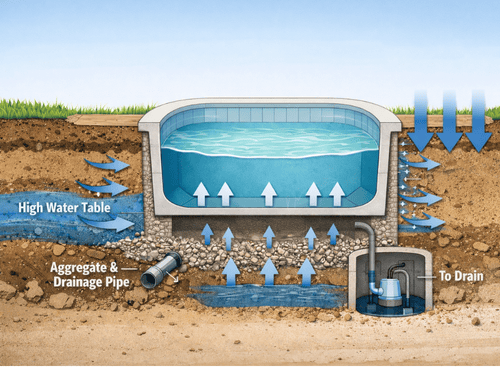
Several factors contribute to groundwater accumulation and the resulting Hydrostatic Pressure:
Heavy Rainfall
Extended periods of rain saturate the soil around your pool. Once the soil can no longer absorb water, the pressure on the pool shell increases.
Poor Yard Drainage
Water that pools near your backyard or around the pool area adds to the soil’s moisture content. This trapped water raises Hydrostatic Pressure and increases risk.
High Water Table
Some areas naturally have groundwater close to the surface. After rain, the water table rises, increasing pressure beneath and around the pool.
Clay Soil
Clay retains water longer than sandy soil. This slow drainage allows water to remain near your pool, continuously exerting pressure.
Underground Plumbing Leaks
Even small leaks in underground pipes can gradually increase soil moisture. Over time, this adds to the pressure against the pool structure.
Recognizing these factors is important for homeowners to prevent damage and know when to call a professional.
Hydrostatic Pressure vs Expansive Soil
Many people confuse Hydrostatic Pressure with soil movement caused by clay. They are distinct issues, but they can affect pools similarly.
Hydrostatic Pressure is caused by water pushing against the pool from the outside. It is an upward or lateral force from groundwater.
Expansive Soil swells when wet and shrinks when dry. This movement causes the ground around the pool to shift, potentially stressing the pool structure.
Both issues can damage pools, but Hydrostatic Pressure is a force exerted by water, while expansive soil is a movement within the soil itself. In some cases, both occur simultaneously, increasing the risk of cracks and structural issues.
Signs Hydrostatic Pressure Is Affecting Your Pool
Homeowners should watch for early warning signs of Hydrostatic Pressure:
Cracks in the Pool Shell
Small cracks in the walls or floor indicate stress from outside pressure.
Bulging Pool Floor
Some areas of the pool floor may lift slightly due to groundwater pressure.
Deck Separating from Pool
Gaps between the pool and the surrounding deck may appear as the soil shifts or pushes.
Water Coming Up Through the Main Drain
Pressure from below can force groundwater into the pool through drains.
Sudden Structural Shifting
Doors sticking, nearby concrete cracking, or uneven surfaces can indicate structural pressure.
Pool Lifting Slightly
In extreme cases, parts of the pool may rise if pressure exceeds the pool’s weight.
Spotting these signs early allows homeowners to address the problem before it becomes severe.
Can a Pool Pop Out of the Ground
In rare situations, a pool can actually lift from its place. This usually happens when a pool is drained without addressing the hydrostatic pressure. Water inside the pool helps hold it in place. Removing it reduces the weight that keeps the pool stable.
If groundwater beneath the pool is high, it can push the pool shell upward. While uncommon, this risk is real, especially after heavy rainfall or in areas with a high water table. Preventing this requires professional inspection and proper groundwater management.
What Is a Hydrostatic Relief Valve and How Does It Work
A hydrostatic relief valve is designed to manage water pressure under the pool. It is usually installed in the main drain area of concrete pools.
The valve allows water to enter the pool when the pressure outside exceeds the pressure inside. This prevents the shell from lifting and reduces the risk of cracks or structural damage.
Not all pools have a relief valve, and it can fail if clogged or neglected. Professionals check these valves before draining a pool to ensure they function properly. This is a critical step in preventing Hydrostatic Pressure damage.
Why Draining Your Pool Without Professional Guidance Is Risky
Draining a pool may seem simple but carries serious risks:
- Removing water eliminates the weight that helps hold the pool in place.
- High groundwater pressure can push upward when the pool is empty.
- Clogged or missing relief valves prevent pressure from escaping.
- Heavy rain before draining increases the risk of structural lifting.
Consulting a professional before draining ensures that groundwater conditions are safe and the pool is protected from damage.
How Professional Pool Builders Prevent Hydrostatic Damage
Proper planning during construction is the best way to prevent Hydrostatic Pressure issues:
Site Evaluation
Professionals assess soil type and groundwater levels before building.
Drainage Planning
Systems are installed to direct water away from the pool area.
Gravel Backfill
Gravel around the pool shell improves drainage and reduces pressure.
Hydrostatic Relief Systems
These systems relieve groundwater pressure and protect the pool structure.
Sump Systems
In areas with high water tables, additional systems may be installed to remove groundwater.
Proper Engineering
Correct pool shell thickness and reinforcement help resist outside forces.
These steps greatly reduce the risk of cracks, lifting, and other structural issues over time.
How Climate and Soil Conditions Affect Pools
Climate and soil play a major role in Hydrostatic Pressure:
- Frequent rain increases soil saturation.
- Clay-heavy soil holds water longer, maintaining pressure.
- Seasonal moisture cycles can expand or contract soil, stressing the pool structure.
Homeowners in areas with heavy rainfall or high clay content should be especially vigilant about pool inspections and proper drainage.
What To Do If You Suspect Hydrostatic Pressure Issues
If you notice signs of Hydrostatic Pressure:
- Do not drain the pool immediately.
- Inspect the pool shell for cracks or bulges.
- Check the surrounding yard for poor drainage or water accumulation.
- Contact a professional pool builder or inspector for evaluation.
Early intervention is the most effective way to prevent major repairs.
Conclusion
Hydrostatic Pressure is a hidden but serious force that can affect your pool. Groundwater pushing against your pool shell can cause cracks, lifting, or other structural issues. Pools built with proper drainage and hydrostatic relief systems are much better protected, but homeowners should still be aware of the signs and act early to prevent damage.
If you notice cracks, shifting, or other signs of Hydrostatic Pressure, contact BC Pools today. Our experienced team can inspect your pool, evaluate potential issues, and recommend the best solutions. Don’t wait for small problems to become costly repairs. BC Pools is here to help you keep your pool safe and enjoyable for years to come.