
Your pool is a big part of your backyard enjoyment, and the small details matter just as much as the water and tiles. One of the most important features to care for is your pool coping stones. These stones are the edges of your pool and serve as both a safety barrier and a decorative finish. Even in Northwest Arkansas, where freezing is usually mild, these stones can be affected by temperature changes, moisture, and debris. Understanding how freeze damage occurs and how to prevent it can save you time and money in repairs while keeping your pool safe and attractive.
Many pool owners focus on water chemistry and cleaning, but forget about coping stones. Water can seep into tiny cracks and, when it freezes, expand. This expansion can chip, crack, or loosen the stones over time. Debris such as leaves, dirt, and twigs can also trap moisture against the stones, making them more vulnerable to damage. By inspecting, maintaining, and protecting your coping stones through winter, you can avoid costly repairs in spring and keep your pool looking its best.
What Are Pool Coping Stones
Pool coping stones are the finishing edge of your pool where the deck meets the pool shell. They provide a safe, slip-resistant walking surface and help prevent water from running back into the pool structure. Coping stones also prevent erosion around the pool perimeter and give the pool a polished, finished look.
These stones come in various materials, including natural stone, concrete, brick, and pavers. Natural stone is popular for its beauty and durability, but tends to be more porous. Concrete is strong and usually uniform, but it can develop cracks over time. Brick and pavers are attractive and versatile, but can shift if not properly installed. Each material has its own strengths and vulnerabilities when it comes to cold weather and freeze damage.
How Freeze Damage Occurs
Freeze damage happens when water enters cracks or porous surfaces and then freezes. When water in the tiny pores of stone or concrete freezes, it expands by about 9% in volume, creating internal pressures that force the material apart over repeated freeze‑thaw cycles. This expansion stress can gradually cause cracks, chips, or even break coping stones apart over time
Moisture from rain, sprinklers, or splashing pool water can collect in gaps between coping stones or in tiny surface pores. Debris like leaves and dirt can trap water against the stones, increasing the risk of freeze damage. Over time, these effects can compromise the safety and appearance of your pool edges if left unchecked.
Signs Coping Stones Are Damaged
It is important to spot problems early to prevent more serious damage. Look for these common signs:
- Cracks, chips, or splitting along the edges of stones
- Stones that feel loose or wobble when walked on
- Stains or discoloration caused by trapped water or debris
- Water is pooling near the coping stones
- Shifting or uneven stones indicate possible foundation issues
Regular inspections, especially before and after winter, help you detect these problems early. A small crack may seem minor, but if left untreated, it can expand, leading to costly repairs and potential safety hazards.
Preventative Measures for Winter Protection
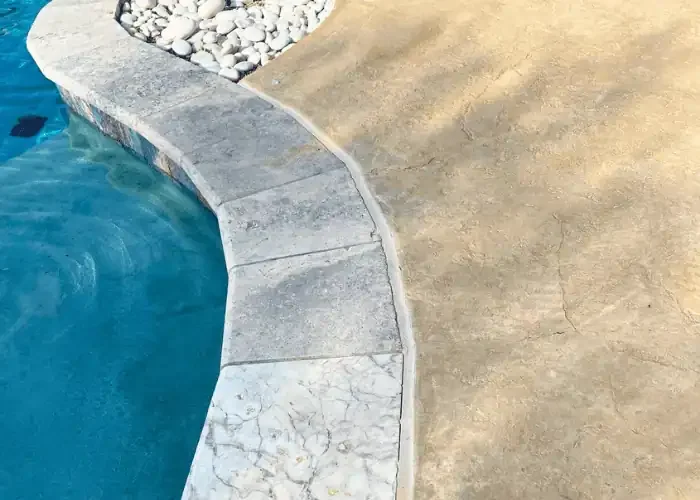
Taking preventive measures is the most effective way to protect your pool coping stones. Here are several steps you can take:
- Inspect and clean coping stones before winter. Remove leaves, dirt, and organic matter to prevent moisture from being trapped. A gentle brush and mild cleaning solution are usually sufficient.
- Apply a sealant appropriate for your stone type. Sealants repel water and reduce the risk of cracks. Natural stone generally needs a penetrating sealant, while concrete can use a water-repellent sealer.
- Cover the pool or edges. A pool cover protects against rain, debris, and the occasional frost. Even partial coverage along the edges can reduce exposure.
- Check drainage around your pool. Standing water can seep into stones and freeze. Make sure water drains away from the pool perimeter.
- Protect joints and gaps with flexible filler or grout. This prevents water from infiltrating between stones and minimizes shifting during freeze cycles.
- Inspect periodically throughout winter. Even if the pool is covered, occasional checks help you catch issues before they worsen.
- Maintain water balance. Proper pH and chlorine levels prevent water from becoming aggressive toward stone surfaces and joints.
Repairing Coping Stones After Winter
After winter, a thorough inspection is essential. Minor damage can often be repaired by homeowners, but more significant issues may require professional attention.
DIY repair options include:
- Filling small cracks with a compatible filler or grout
- Resetting slightly loose stones with adhesive designed for outdoor stone
- Reapplying sealant after cleaning and minor repairs
For larger problems:
- Consult a professional if multiple stones are loose, cracked, or showing structural concerns
- Professionals can use high-quality products and methods to ensure long-lasting repairs
- After repairs, resealing coping stones helps prevent future freeze damage
Following these steps ensures that your coping stones remain durable, safe, and attractive for years to come.
Material-Specific Tips
Different materials respond differently to freeze cycles:
- Natural stone absorbs water more readily. Apply penetrating sealants to prevent cracks. Inspect for surface chips that could worsen over winter.
- Concrete is strong but can crack under repeated freezing and thawing. Water-repellent sealers reduce the risk.
- Bricks and pavers can shift if not stabilized. Use polymeric or joint sand to secure pavers and prevent water from seeping into gaps.
Knowing the strengths and vulnerabilities of your coping stones allows you to take targeted preventive measures.
Long-Term Benefits of Protecting Coping Stones
Protecting your coping stones from freeze damage has several benefits:
- Prevents costly repairs or full replacement
- Maintains pool safety and reduces the risk of slips or injuries
- Preserves the visual appeal of your pool
- Extends the life of your pool’s edge and surrounding structure
- Ensures your backyard remains ready for use as soon as the weather warms
Investing in preventive care and early repairs saves time, money, and stress over the years.
FAQs
1. Can freeze damage really crack pool coping stones?
Yes, water trapped in cracks or porous surfaces expands when frozen, causing cracks or loosening stones. Regular winter inspections help prevent costly damage.
2. How often should I inspect coping stones during winter?
Check coping stones at least once a month, especially if your pool in Northwest Arkansas is uncovered or exposed to rain and debris. Early detection prevents larger repairs.
3. What type of sealant is best for winter protection?
Natural stone needs penetrating sealants, concrete benefits from water-repellent sealers, and brick or pavers do best with flexible joint fillers. Proper sealing helps prevent freeze damage.
4. Can I repair cracked coping stones myself?
Small cracks and minor loosening can be repaired with DIY fillers and adhesives. Larger cracks or loose stones should be repaired by a professional to ensure safety and durability.
5. How does pool drainage affect coping stone durability?
Proper drainage prevents water from pooling around stones. Standing water increases the risk of freeze damage and accelerates wear on grout or joints, reducing the lifespan of coping stones.
Conclusion
Coping stones are a small but vital part of your pool. Freeze damage can happen even in Northwest Arkansas, and it can lead to cracks, chips, or loose stones if preventive steps are not taken. By cleaning, sealing, inspecting, and repairing your coping stones regularly, you can protect your pool, maintain safety, and avoid costly repairs.
For professional pool maintenance and winter protection of your coping stones in Northwest Arkansas, contact BC Pools. Their team can inspect, repair, and seal your pool edges to ensure your pool stays safe, beautiful, and ready for use year-round.