
Heavy winter rainfall in Northwest Arkansas can put serious stress on your pool structure, even if temperatures stay above freezing. Many homeowners focus only on ice and snow, but large amounts of rain can create hidden pressure around and beneath a pool. When soil becomes saturated, it expands, shifts, and pushes against the pool shell. Over time, this can lead to cracks, movement, and costly repairs.
If you own a pool in Northwest Arkansas, understanding how winter rain affects your pool structure is essential. The combination of clay-rich soil, rolling terrain, and seasonal storms creates unique conditions. Without proper drainage and monitoring, heavy rain can weaken support around the pool and cause long-term structural problems. Knowing what to look for and how to prevent damage can protect your investment and extend the life of your pool.
Why Winter Rainfall Is a Serious Concern in Northwest Arkansas
Northwest Arkansas often sees steady rainfall during the winter months. While summer storms can be intense, winter rain tends to linger. The ground remains wet for longer periods because cooler temperatures slow evaporation.
The soil in many parts of Northwest Arkansas contains clay. Clay soil absorbs water and expands. When it dries, it shrinks. This constant movement places stress on structures built within or around it, including your pool. According to the U.S. Department of Transportation, expansive clay soils can undergo large volume changes when water content increases or decreases, which can affect nearby structures.
When heavy rain saturates the soil around a pool, several things happen:
• Soil becomes heavier and presses against pool walls
• Groundwater levels rise beneath the pool
• Water collects around decks and equipment pads
• Drainage systems may become overwhelmed
All of these factors directly impact the stability of your pool structure.
How Saturated Soil Affects Pool Structure
Hydrostatic Pressure Explained in Simple Terms
Hydrostatic pressure sounds technical, but the concept is simple. When the ground fills with water, that water pushes in all directions. It pushes sideways against the pool walls and upward beneath the pool floor.
If groundwater rises high enough, the upward pressure can become stronger than the weight of the pool itself. This is especially concerning for fiberglass pools, which are lighter than concrete pools. In severe cases, rising groundwater can cause a pool to shift or lift slightly.
Even small amounts of upward pressure can stress the pool shell and create cracks over time.
Lateral Pressure on Pool Walls
Water-soaked soil expands and becomes dense. This dense soil pushes against the outer walls of the pool. Concrete and gunite pools are strong but rigid. They do not flex easily. When constant pressure builds, small cracks may form.
These cracks may start as hairline lines but can widen if pressure continues through multiple rainy seasons.
Soil Erosion Around the Pool
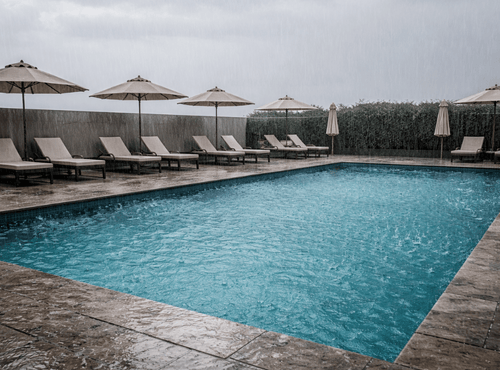
Heavy rain can also wash away soil that supports the pool and the surrounding deck. When backfill soil erodes, empty spaces may form beneath decking or along the pool shell.
This can lead to:
• Uneven deck surfaces
• Sinking pavers
• Gaps near coping
• Loss of structural support
Soil erosion may not always be visible right away. Over time, however, movement becomes noticeable.
How Different Pool Types Respond to Heavy Rain
Concrete and Gunite Pools
Concrete and gunite pools are durable, but they rely on stable soil for support. When the surrounding soil shifts or erodes, stress transfers to the shell.
Common issues include:
• Surface cracking
• Plaster separation
• Tile line movement
• Coping gaps
These pools are heavy, so they are less likely to float. However, they are more prone to cracking when soil pressure builds unevenly.
Fiberglass Pools
Fiberglass pools are flexible, which helps them handle minor soil movement. However, they are lighter than concrete pools. If groundwater rises significantly, there is a risk of the pool lifting or shifting.
This is rare but possible in areas with poor drainage or prolonged heavy rainfall. Proper groundwater management is critical for fiberglass installations.
Vinyl Liner Pools
Vinyl liner pools use wall panels and a flexible liner. If soil shifts or erodes, the wall panels can move. This may cause the liner to wrinkle or pull away from the corners.
Water trapped beneath the liner due to high groundwater can also create bubbles or soft spots.
Signs Heavy Rain Has Affected Your Pool Structure
After a period of heavy winter rainfall, inspect your pool carefully. Early detection prevents larger repairs.
Watch for:
• New cracks in plaster or concrete
• Uneven areas on the pool deck
• Gaps forming around coping stones
• Tiles that appear loose
• Water level dropping without explanation
• Soil pulling away from the deck
• Equipment pad shifting or sinking
If you notice any of these signs, it is wise to schedule a professional inspection.
Deck and Surrounding Area Damage
The pool shell is not the only structure at risk. Heavy rain also affects the surrounding deck and landscape.
Deck damage may include:
• Cracked concrete slabs
• Sunken pavers
• Separation between deck and pool coping
• Standing water after storms
When the deck shifts, it can place additional pressure on the pool walls. Proper drainage around the deck is just as important as drainage around the pool shell.
Drainage Problems That Increase Structural Risk
Poor drainage is one of the biggest contributors to pool structure problems in Northwest Arkansas.
Yard Grading Issues
If your yard slopes toward the pool, rainwater will collect around it. Over time, this increases soil saturation and pressure.
Clogged Drainage Systems
French drains and surface drains help redirect water away from the pool. If they become clogged with debris, water backs up and collects where it should not.
Downspout Placement
Roof downspouts that discharge near the pool can add large volumes of water to already saturated soil. Redirecting downspouts away from the pool area reduces risk.
Blocked Deck Drains
Deck drains prevent water from pooling on the surface. When blocked, water sits near the pool edge and increases soil saturation below.
Addressing these drainage concerns protects your pool structure from unnecessary stress.
Preventing Structural Damage from Heavy Winter Rain
Prevention is always less expensive than repair. Several steps can reduce risk during heavy rainfall.
• Ensure proper yard grading away from the pool
• Keep drainage systems clear and functional
• Inspect deck drains before and after storms
• Monitor soil erosion around the pool
• Check for early signs of cracking
• Schedule professional inspections during winter months
In some cases, installing additional drainage solutions may be necessary. This might include improved French drains or sump systems designed to control groundwater.
The Importance of Professional Evaluation
Some structural concerns are not visible to the untrained eye. A professional inspection can identify subtle shifts or pressure points before they worsen.
An experienced pool professional will:
• Examine the pool shell for stress cracks
• Check coping and tile stability
• Evaluate drainage performance
• Assess soil movement around the pool
• Inspect equipment pad stability
This level of detail ensures that small issues are addressed early.
Long-Term Benefits of Addressing Rainfall Risks
Taking action now protects your investment for years to come.
Benefits include:
• Extended lifespan of the pool structure
• Reduced need for major structural repairs
• Improved property value
• Safer environment around the pool
• Lower long-term maintenance costs
Heavy winter rainfall is unavoidable in Northwest Arkansas. Structural damage is not.
Local Experience Matters
Every region has different soil and weather conditions. Northwest Arkansas has rolling terrain and clay-based soil that reacts strongly to moisture changes.
Understanding how these local conditions affect a pool structure is essential for proper prevention and repair. Experience with local drainage challenges makes a significant difference in outcomes.
Working with a team familiar with Northwest Arkansas conditions ensures your pool is evaluated correctly.
Conclusion and Call to Action
Heavy winter rainfall in Northwest Arkansas can quietly place stress on your pool structure. Saturated soil, rising groundwater, and poor drainage all contribute to cracks, shifting, and long-term damage. While freezing temperatures often get the most attention, rainfall can be just as harmful.
Monitoring your pool after heavy rain, maintaining proper drainage, and addressing early warning signs can prevent costly repairs. Protecting your pool structure means protecting your investment and your property value.
BC Pools has extensive experience evaluating and protecting pool structures throughout Northwest Arkansas. Our team understands local soil conditions, drainage challenges, and structural risks caused by heavy winter rainfall.
If you have concerns about your pool after recent storms, contact BC Pools today to schedule a professional inspection. Early action can prevent small issues from becoming major structural repairs. Let our team help you keep your pool safe, stable, and ready for every season.